Between the raw brilliance of the first F1 GTR and the uncompromising focus of the runout Long-Tail lay a fleeting moment of perfect balance. At the heart of that story sits chassis 10R.
Contrary to popular opinion, Gordon Murray didn’t set out to build the fastest car in the world when he began sketching out what would become the McLaren F1. Rather, he wanted to build the ultimate driver’s car. That it became a record breaker was in many ways a happy accident, the result of a series of careful decisions, a clear vision, and Murray’s relentless unwillingness to compromise. He didn’t set out to build a racer either. And yet, the model would go on to win the greatest prize in sports car racing—at its first attempt no less.
Even more remarkable was that the car itself appeared pretty much from nowhere. Gordon Murray had spent most of his career in Formula 1, building championship-winning cars for everyone from Alain Prost to Ayrton Senna, and with his time at the top coming to an end he was charged by Ron Dennis and Mansour Ojjeh to build a road car. With a budget of just £8.5 million, Murray didn’t only have to deliver a car but an entire company; everything from the staff and infrastructure to the works itself was set up from scratch.
“My fellow [commercial] director Creighton Brown and I walked into literally an empty concrete building, so I got to do the design of the building, the layout, the plants, the pictures, and pick the whole team from scratch,” remembers Murray. “It was a tiny team, only seven of us on design, including me, with a lot of bright young people.”
Among them was Peter Stevens, who had been an integral part of the Jaguar XJR-15 project at Tom Walkinshaw Racing—famously the first car to employ carbon fibre not only for its bodywork, but its chassis too. But while the Jaguar was based on an existing Group C racer, the F1 would be a completely clean sheet design. Ironically, a race programme was ruled out very early in the process due to Murray’s unwillingness to compromise the road car.
“We agreed that it wasn’t going to be a stripped-out racing car like an F40, it had to be a usable everyday car, and for me that’s not just having air-con and a sound system, that means decent carpets, proper luggage space, good visibility…
“I wrote a spec by hand then shared it with Mansour and Ron,” he continues. “The overall targets were the lightest car by miles—1,000 kilograms was my original target—the best engineered car, the best driver’s car from a feedback point of view, so no power assistance or that sort of stuff, and the styling had to be classic.”
For a man used to strict Formula 1 regulations, building a road car offered an incredible level of freedom, and while certain elements were dictated by law—such as the height of indicators—Murray found the brief liberating. From active aerodynamics and fan-assisted ground-effect to automatic brake cooling, the McLaren F1 became a vehicle for all the technology that was outlawed in the top-flight of motorsport.
For the engine, McLaren initially turned to its Formula 1 partner, Honda, with discussions centring around a bespoke 4.5-litre V-10 or V-12 before the Japanese manufacturer eventually pulled the plug. Then, another happy accident: “I was at Hockenheim and happened to walk past BMW where [engineer] Paul Rosche was having a beer,” recounts Murray. “He said, ‘I’ll do you an engine’ and the rest was history.”
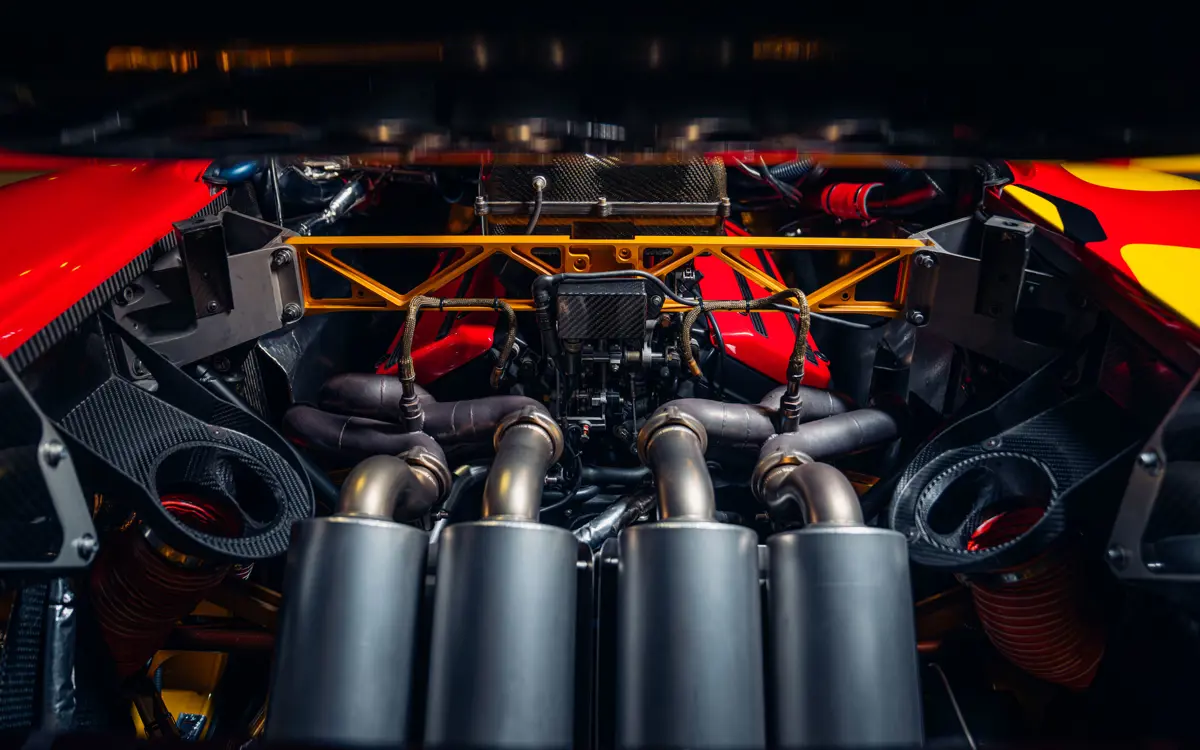
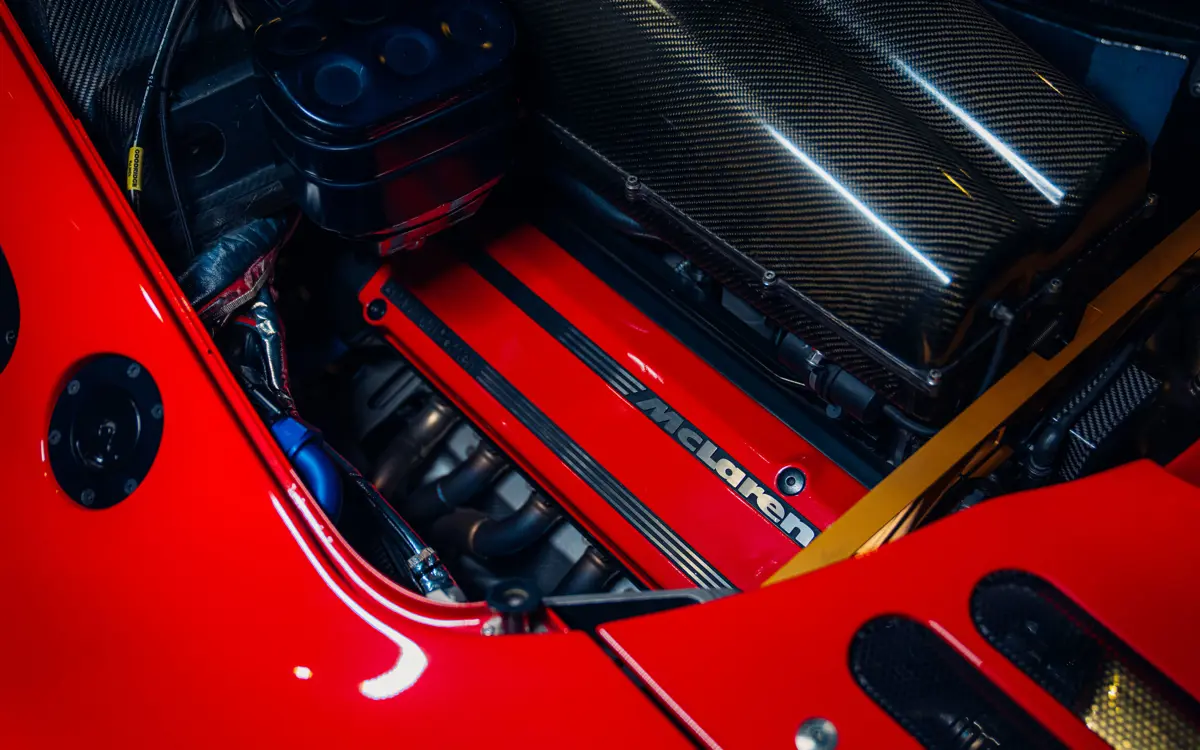
His creation was dubbed the S70/2, a naturally aspirated, dry-sumped, all-alloy 6.1-litre V-12 with four-valve, twin-cam cylinder heads set in a 60-degree vee. The plan was to borrow parts from BMW’s existing V-12 engine, but in the end not a single component was carried over. Sharing Murray’s obsession, Rosche figured that none of the off-the-shelf parts were light enough.
Despite the weight savings, the engine did result in McLaren missing their 1-tonne target by around 140 kilograms, but the payoff was a huge increase in performance. The engine kicked out a staggering 618 brake-horsepower and delivered 455 pound-feet of peak torque. Mated to a purpose-built six-speed manual transmission, the McLaren F1 was good for zero to 60 mph in just 3.2 seconds and a top speed of 240 mph, inadvertently making it the fastest production road car in the world. With its central driving position, elegant styling, and visceral power delivery, it would go on to become an icon.
While Murray never had any plans to test the car in competition, the decline of Group C presented McLaren with an unmissable opportunity. With teams dropping out left, right, and centre and grid numbers dwindling, the FIA cancelled the World Sports Car Series Championship in 1992, leaving only the 24 Hours of Le Mans. For 1993, production-based GT cars were invited to run alongside Group C to fill out the entry list, while the following year the prototypes were handicapped, levelling the playing field and giving the road car-based GT1 cars a real chance at silverware. Customers clamoured for a racing variant of the world’s fastest car, leading Murray to green light the McLaren F1 GTR.
Bucking the trend of racing cars that became supercars, the McLaren F1 was a road car that went racing—and it excelled due to a tremendous level of Formula 1-derived technology and know-how that went into its design. The F1 GTR was essentially a lightened version of the road car, featuring new bodywork that was tweaked for racing, a large rear wing to further increase downforce, and carbon-ceramic disk brakes better suited to the rigours of circuit work. The McLaren F1 road car was so accomplished that both engine and gearbox were largely unmodified, though air restrictors limited the power output to around 600 horsepower.
Starting with its own development car, chassis 01R, McLaren built a total of nine F1 GTRs for the 1995 BPR Global GT Series. No fewer than seven lined up at the Circuit de la Sarthe on 18 June, faced by a phalanx of highly specialised prototype competition in the form of everything from Ferrari 333 SPs to Kremer K8s. Against all the odds and in biblical weather, 10R, raced under the Kokusai Kaihatsu Racing banner by JJ Lehto, Yannick Dalmas, and Masanori Sekiya, didn’t just win the GT1 class—it took a spectacular overall victory. Murray had likened the challenge of winning Le Mans on debut to scoring back-to-back Formula 1 World Championships, and to underscore the magnitude of the achievement, McLaren F1 GTRs also finished 3rd, 4th, and 5th.
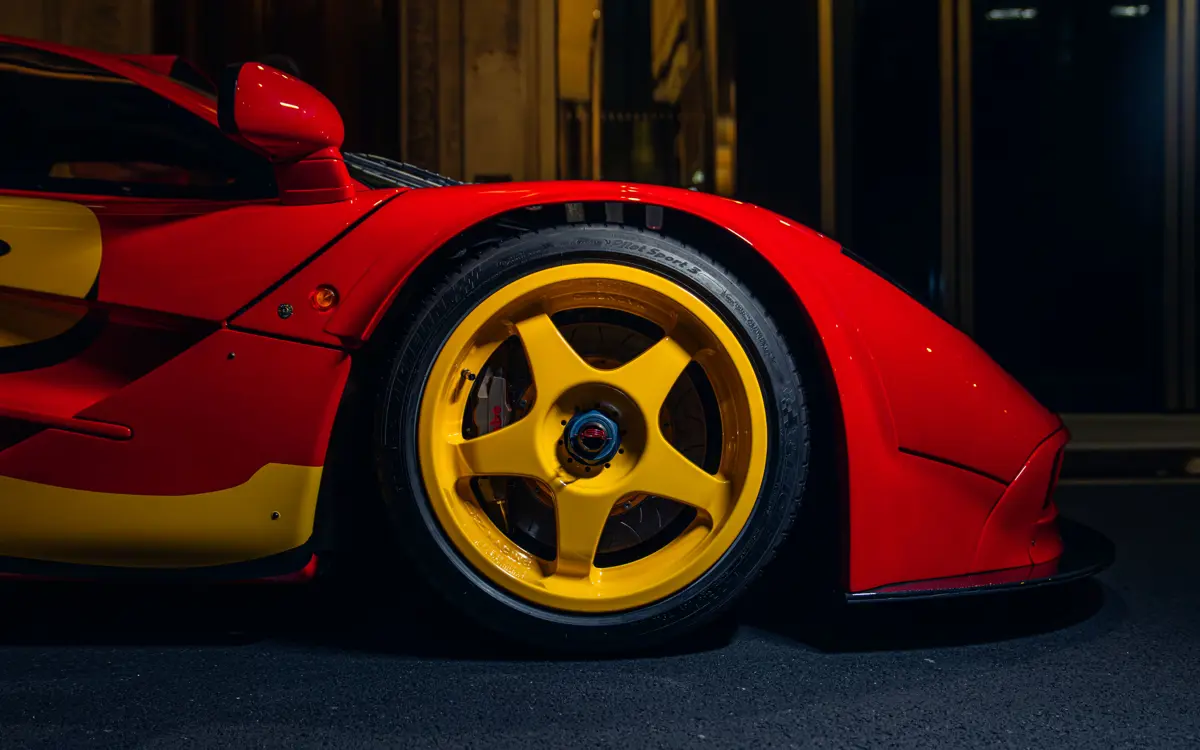
For the 1996 season, McLaren faced the formidable new challenge of pure-bred racers like the Porsche GT1—clean sheet projects designed solely as endurance racers rather than modified production cars like the Ferrari F40. In order to stand a hope of remaining competitive, let alone winning, the F1 GTR needed a raft of improvements, many of which were a direct result of the experience gained during the previous 12 months of competition. The resulting car was dubbed the McLaren F1 GTR 1996, and featured bigger front wheel arch extensions, an aggressive front splitter that contributed to an 80-mm increase in overall length, plus a re-profiled rear spoiler. Quick-release body panels were fitted for swifter pit stops, while the gearbox benefitted from more robust heavy-duty internal components and a lightweight magnesium housing that contributed to a 38-kilogram reduction in the 1995 GTR’s kerb weight. It now tipped the scales at just 1,012 kilograms—within an ace of Murray’s original target weight for the roadgoing F1.
The changes made for the 1996 model year not only created the best-looking McLaren F1 GTR, but also the quickest—proving faster than even the “Long-Tail” variant that arrived the following season. Like before, only nine 1996-specification McLaren F1 GTRs were built for that season including the most significant of them all: chassis 10R.
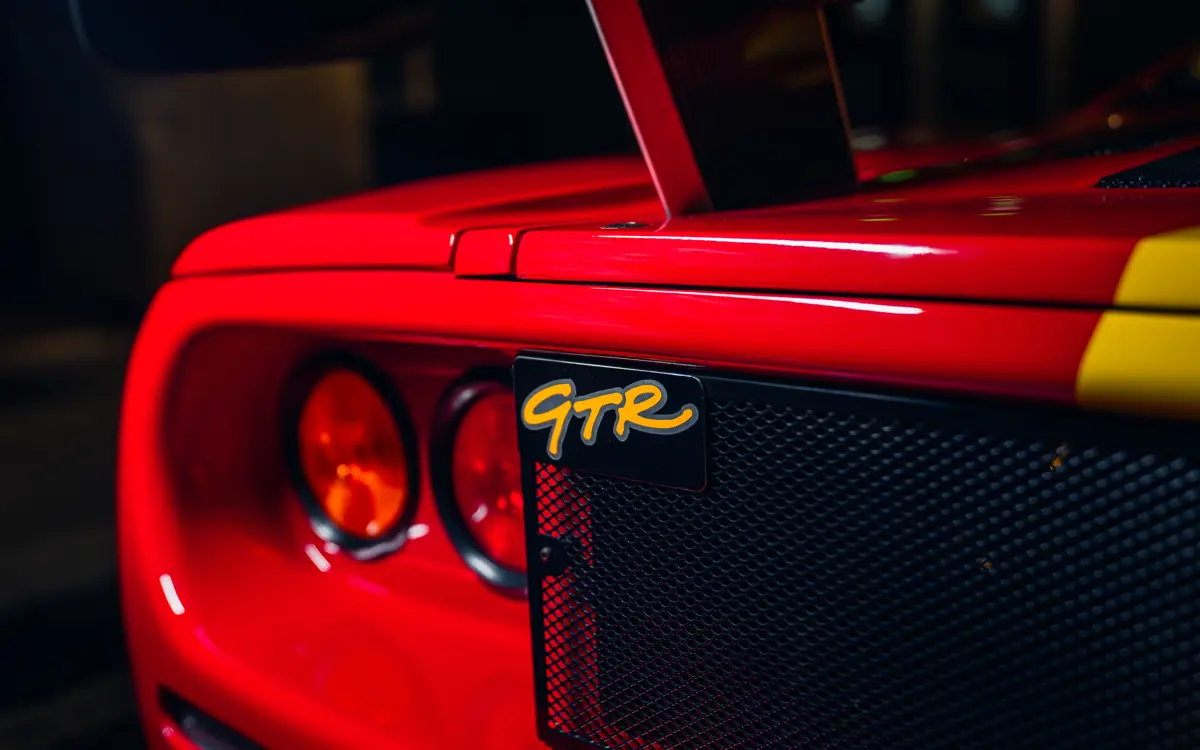
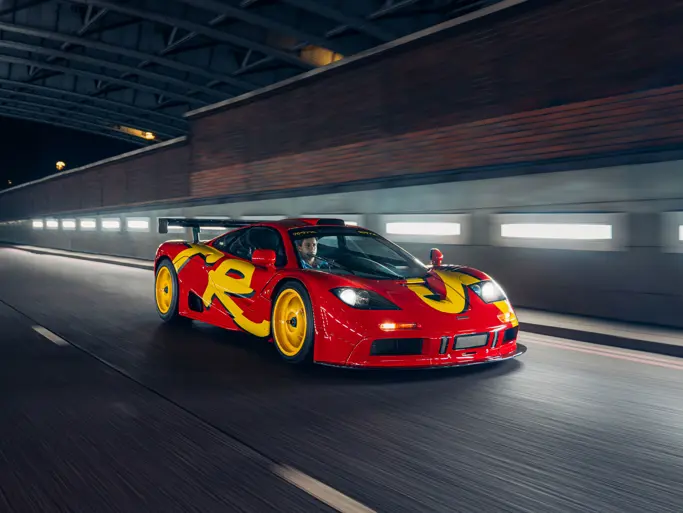
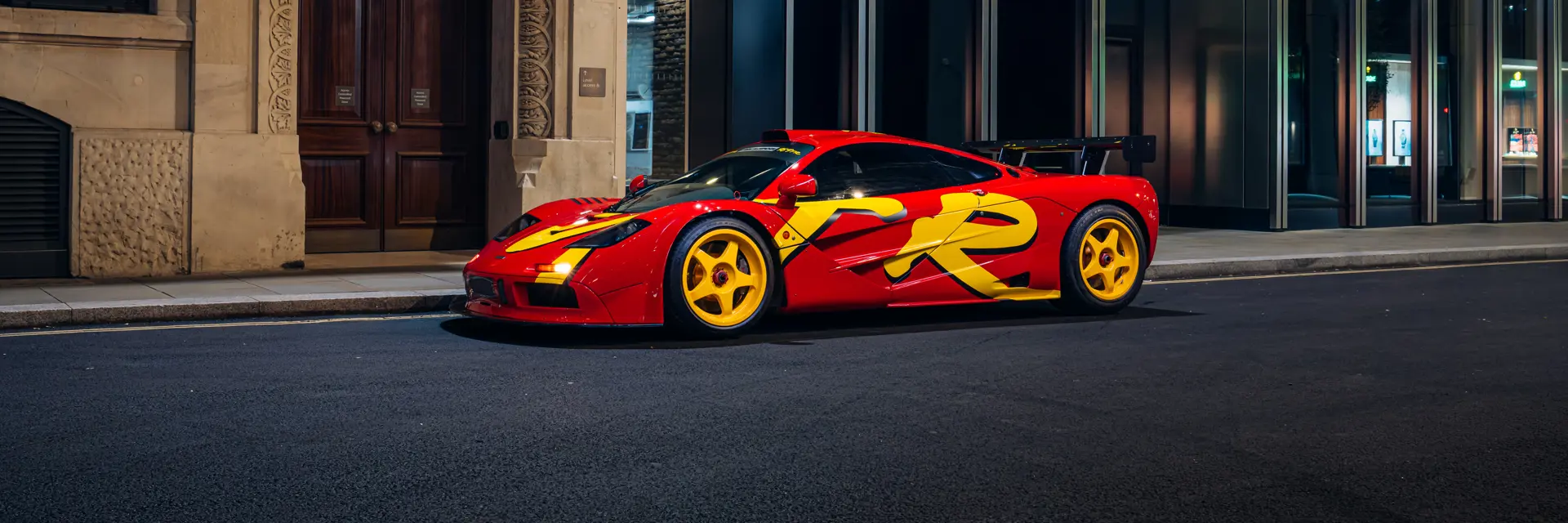
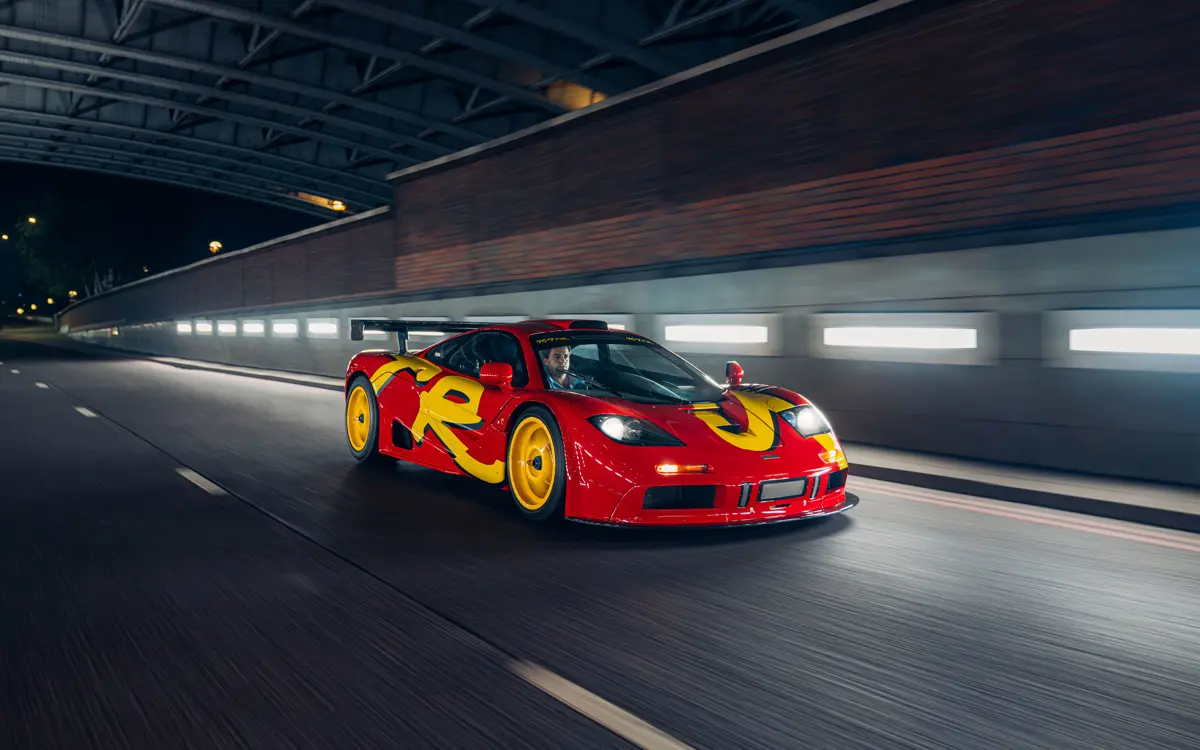
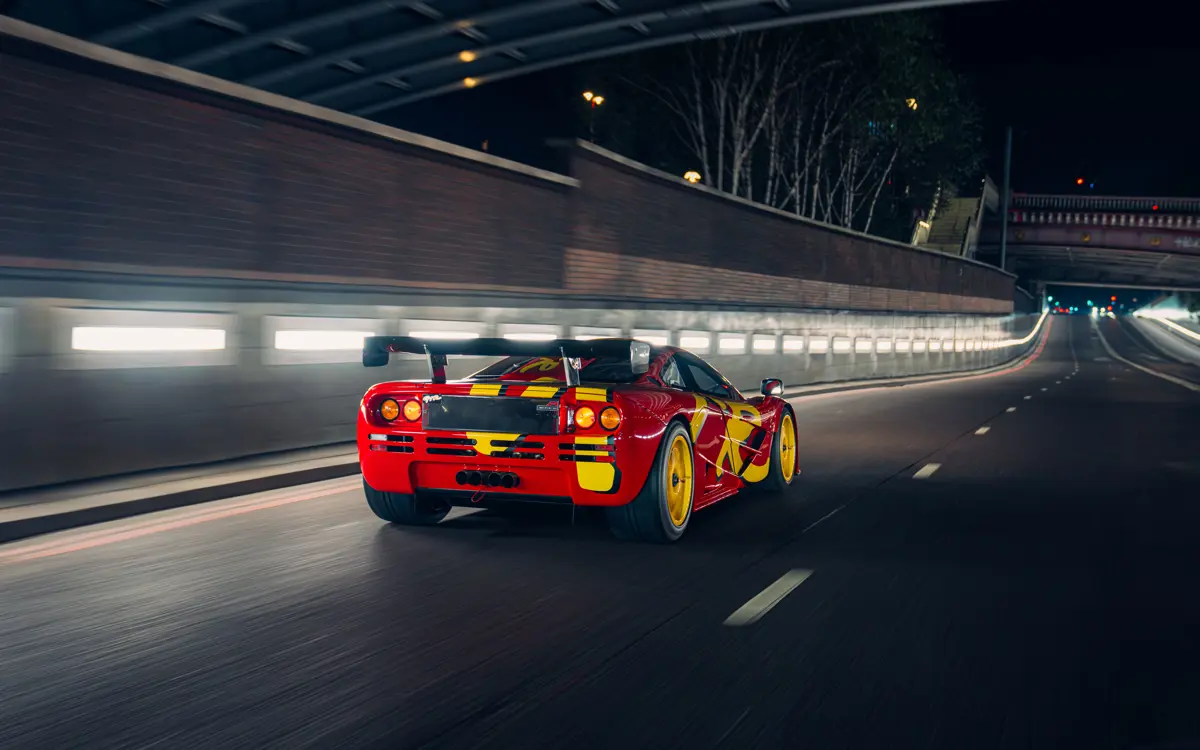
Following in the footsteps of the legendary Le Mans-winning 01R, chassis 10R left McLaren’s Woking works in December 1995 as the first example of the uprated and improved cohort. Like its famous predecessor, 10R served as McLaren’s own development car for the model—the competition equivalent of the five legendary “XP” cars that served as prototypes for the roadgoing F1—and as an eye-catching press and promotional tool. Designed to stand out, the car was finished in Blood Red overlayed with striking yellow “96 GTR” graphics along its flanks and across its bonnet and roof, and it quickly became a fixture at select rounds of the BPR Global GT Series and the star of several magazine articles.
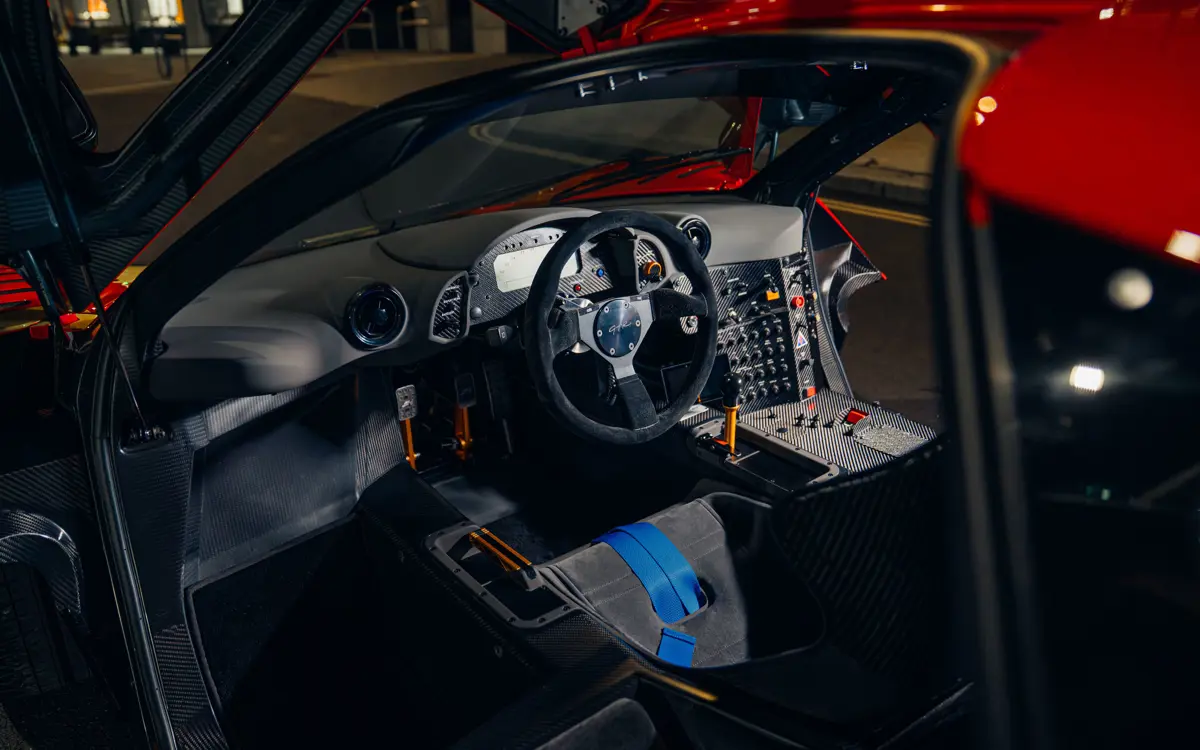
Its striking livery may have helped to raise the GTR’s profile, but at its heart it was still a racer. Shortly after leaving the factory the car was put into action during testing at Magny-Cours, where it was driven by none other than JJ Lehto, fresh from his win at Le Mans just months earlier. In April, 10R took part in 12 hours of testing in preparation for the manufacturer’s second attempt at winning the 24-hour epic, and just three weeks after that it was sent to La Sarthe, where it participated in Pre-Qualifying for the main event. Screaming down the Mulsanne in plain Blood Red livery over graphite wheels, the car was run under the auspices of reigning Le Mans champions Kokusai Kaihatsu Racing, and was put through its paces by McLaren works driver David Brabham.
As the recently unveiled upgrade of the previous year’s overall winner, entered by the defending champions, it’s safe to say that the eyes of the sporting world would have been locked on 10R and the timing board as Brabham lapped the famous circuit. By the end of the weekend 10R had ranked 8th in class and 20th overall.
Come June, seven McLaren F1 GTRs lined up to contest the race proper, though this time the overall win went to a Joest Racing TWR Porsche WSC-95 prototype. More ominously, the winning car was closely followed by a brace of new Porsche 911 GT1s entered by the factory. Despite a late challenge with wins for Porsche at Brands Hatch, Spa-Francorchamps, and Zhuhai, McLaren F1 GTR drivers Ray Bellm and James Weaver clinched the overall drivers’ championship with 247 points.
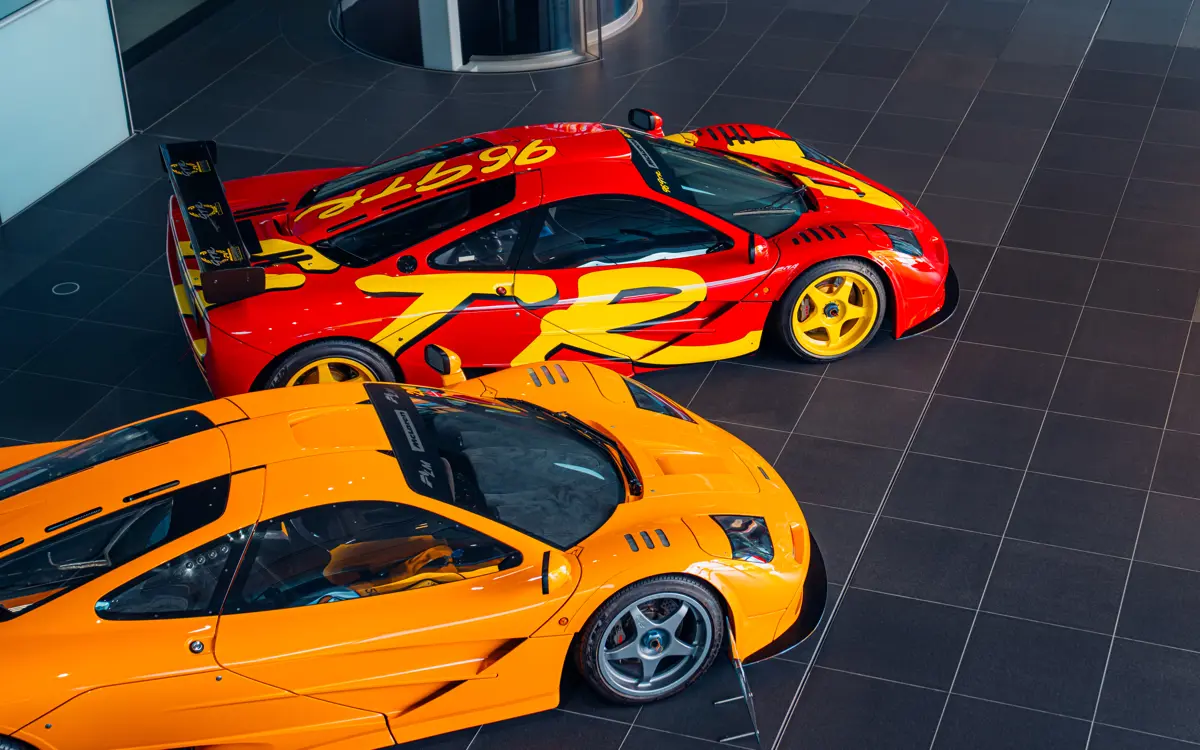
With the arrival of 19R and the Long-Tail McLaren F1 GTR in 1997, the career of 10R as both a development car and promotional tool drew to a close. It remained in the care of the marque for a further two years before finally being sold to its first private owner—none other than Pink Floyd drummer and renowned car collector, Nick Mason. As a lifelong devotee of the motor car, Mason had amassed a collection of the world’s most desirable automobiles, many of which blurred the lines between road and track. The McLaren F1 GTR joined a selection of machines that included a Ferrari 250 GTO, a Jaguar D-Type, a Bugatti Type 35, and a Porsche 962, models that made their names in racing, but which, through versions like the Jaguar XKSS and Schuppan 962, also became known for pushing the boundaries of performance on the road. As one of the most celebrated racecars of its era, chassis 10R was a perfect fit—especially as it had been converted for road use by McLaren prior to entering Mason’s ownership.
Following the conversion, 10R was registered for the road in 1999 with the number “K40 MCL,” and subsequently underwent several further improvements at the hands of Paul Lanzante—the very man who had led Kokusai Kaihatsu Racing and the McLaren F1 GTR to overall victory at Le Mans in 1995. Among the changes carried out at Mason’s request was the fitment of a reversing camera, which greatly improved usability on Britain’s roads. In fact, 10R was something of a pioneer, being among the very first F1 GTRs to be converted for road use.
Chassis 10R would remain in Mason’s care for the next quarter of a century, during which it was shared with the public at every opportunity. Notable appearances included a showing at Paris’s Rétromobile event in 2007, where it was presented in its base Blood Red paintwork and without its trademark GTR decals. Two years later and once again resplendent in its iconic yellow script livery, the car was entrusted to Autocar’s Steve Sutcliffe, who remarked after the full-blooded test: “No mere mortal could ever possibly understand how much raw energy the F1 GTR has at its disposal, or how easily it will generate wheelspin; even in third gear on a bone-dry road you can turn it around at anything less than 60 mph… There is nothing on this earth that can prepare you for the eruption of acceleration—or the violent outburst of noise—that occurs when you finally slap the accelerator open for the very first time.”
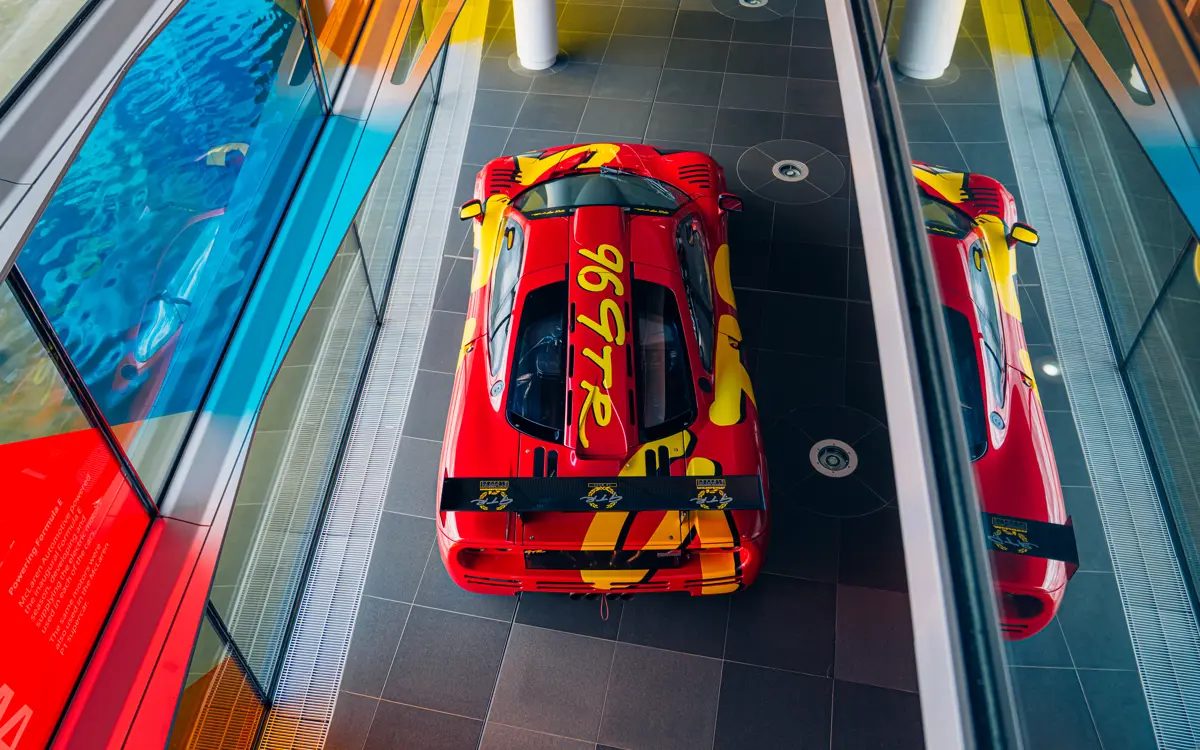
That same year, another journalist is reported to have lost control of the car before driving through a field of wheat, prompting a no-expense-spared restoration by Dean Lanzante, son of Paul and another member of the heroic team that had won Le Mans. Like his father, Dean devoted his working life to McLaren, with his company, Lanzante Ltd, eventually growing to include the official dealership McLaren Petersfield. Having worked closely with his father on the restoration and race preparation of McLaren Formula 1 cars and F1 GTRs, Dean became the foremost authority on the marque and the go-to expert for converting F1, P1, and Senna GTRs for road use, in addition to a host of other track-only specials from other manufacturers.
In 2012, 10R went on display at the 73rd Goodwood Members’ Meeting, and just a few weeks later it took part in the 750-kilometre 70th Anniversary Tour organised by the 106 Drivers Club, the ultra-exclusive invite-only supercar collective dedicated solely to owners of McLaren F1s and McLaren F1 GTRs. Based at Villa Feltrinelli in Italy and supported by McLaren Special Operations, the tour was attended by 19 McLaren F1s including five GTRs and XP3 and XP4 prototypes. Two years later the car took part in the Club’s Tour of Tuscany, another 750-kilometre rally this time based in Siena, Italy.
After leaving the track during a GT1 demonstration at the 75th Goodwood Members’ Meeting and colliding with a tyre wall, Mason sent the car to Dean Lanzante for its second no-expense-spared restoration—a product of the owner’s “open chequebook” policy when it came to the car’s maintenance. The car would return to Lanzante following every significant drive, with every facet of its mechanical and cosmetic condition pored over with obsessive detail.
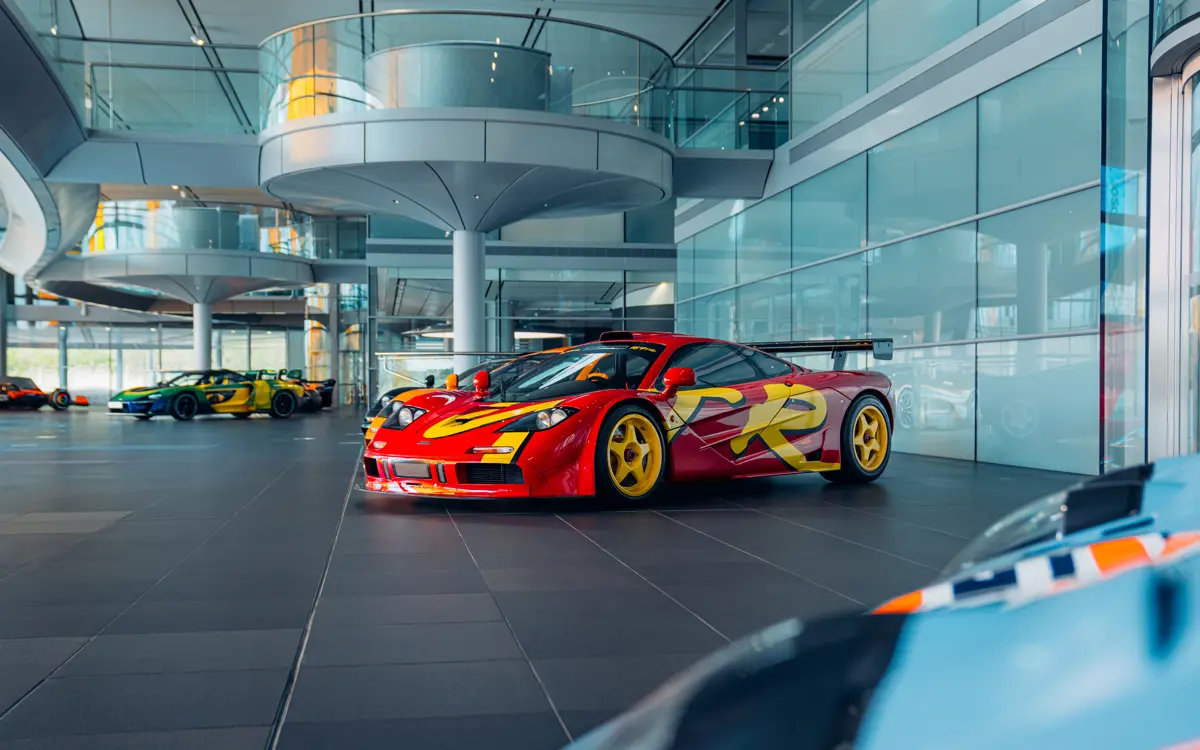
In the pantheon of McLaren F1s, chassis 10R is rightly considered to be among the very best. Outside of the five “Experimental Prototype” road cars—two of which were destroyed in testing, one of which was retained by McLaren, with the remaining two in private ownership—the racing variants are accepted to be the most sought after. Chassis 10R is further marked out by being one of nine 1996-specification cars, in many ways the Goldilocks model that combined the effortless good looks and proportions of the Short-Tail body style with the manifold technical improvements that were the product of a year’s racing and that spectacular win at Le Mans.
Of those nine cars, chassis 10R is without a doubt the most significant, being the very first to leave the Woking works. Effectively the 1996 prototype, the car served as a test bed for the model, and while it never raced in anger, it played a vital role in preparation for that season’s campaign and the GTRs’ second assault on the 24 Hours of Le Mans. It remains part of an elite trio of “XP” F1 GTRs that included chassis 01R—the Ueno Clinic-liveried 1995 Le Mans winner—and 19R, the first 1997 Long-Tail F1 GTR that was also used by McLaren for development purposes.
As the most celebrated and sought after of all modern supercars, all McLaren F1s are special. Though there remains a small number of the 106 built that can be considered truly exceptional. Chassis 10R occupies that rarified air, being both the most desirable specification and a development prototype, wearing an iconic livery, and having spent its entire life in the care of a highly respected single owner. The vanishingly few examples that can be spoken about in the same breath are unlikely to ever be offered for sale, making this the best chance in living memory to acquire one of the most significant examples of the most sought-after modern supercar in the world.