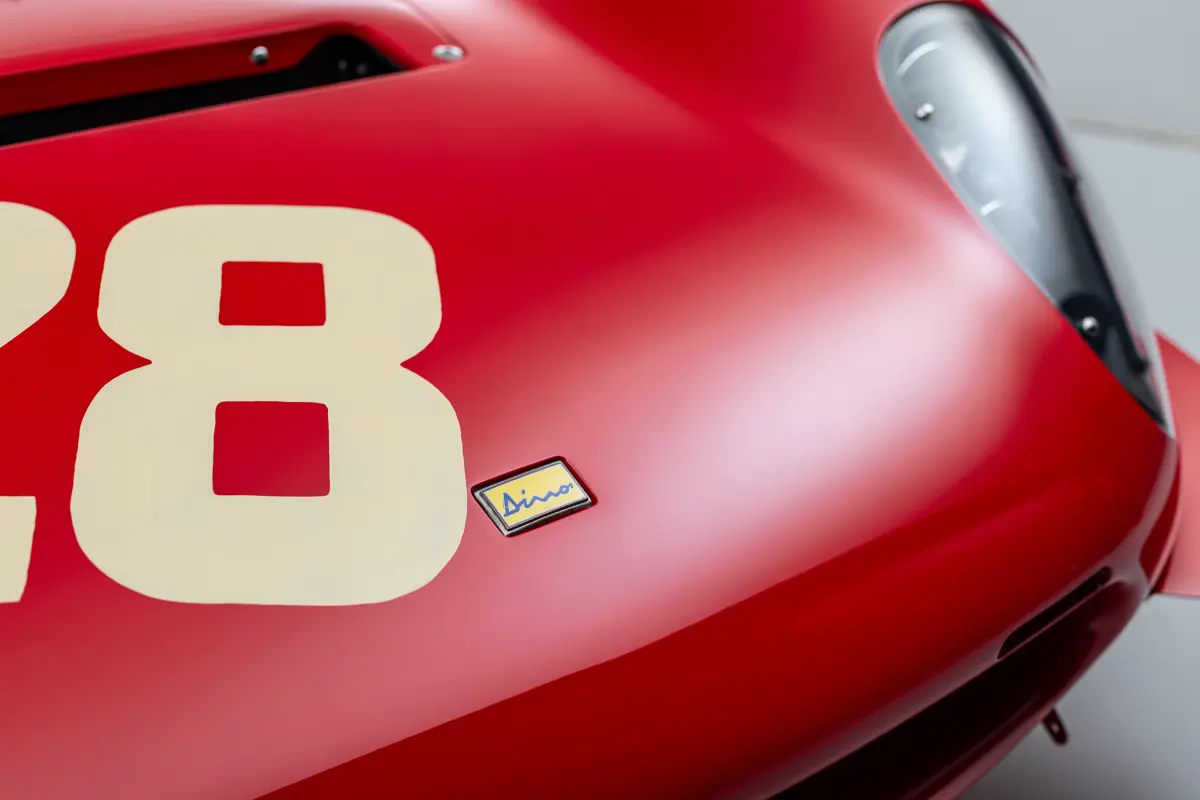
The Dino name disappeared from competition following the retirement of the 206 S. This special example—the very last to pass through Maranello’s hallowed gates—ensured a fitting end to the dynasty, says Jarrett Rothmeier
It’s fair to say Ferrari swung into the sixties with a swagger. Already synonymous with top-flight motorsport success, the Scuderia captured the Formula 1 World Championship in 1961 and 1964, while at Le Mans, Enzo’s blood-red machines won the great race outright no fewer than five times between 1960 and 1964. Towards the end of the decade results began to wane slightly, while the ranks of privateers—a potentially lucrative source of income for race teams—were queuing up not at Maranello, but Zuffenhausen. In an attempt to win over teams who had been tempted by Porsche, in February 1966 Ferrari launched a new sports racing car formulated for the FIA’s 2-litre Group 4 class: the Dino 206 S.
The new car was named for Enzo’s son, Alfredo, who, more than a decade earlier, had pioneered Maranello’s development of the V-6 engine, tragically losing his life before hearing his creation fire in anger. Co-engineered by legendary designer Vittorio Jano, the 65-degree engine was first introduced as a Formula 2 powerplant before being uprated for Formula 1, where it carried Mike Hawthorn to victory in the 1958 Driver’s World Championship. The Scuderia’s grand prix cars eventually moved to 120-degree V-6 engines, though Dino’s creation lived on in a series of experimental sports prototypes including the 196 Sport, 246 Sport, the Dino SP models and the 166 P.
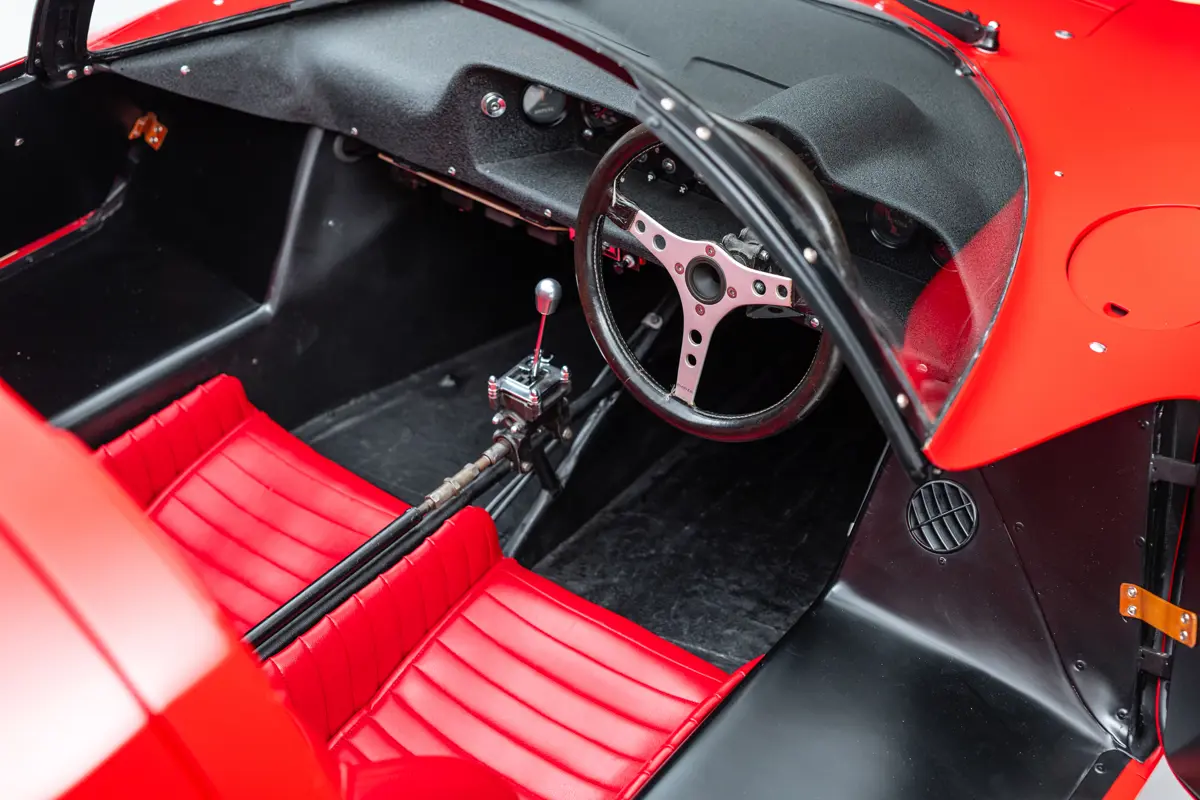
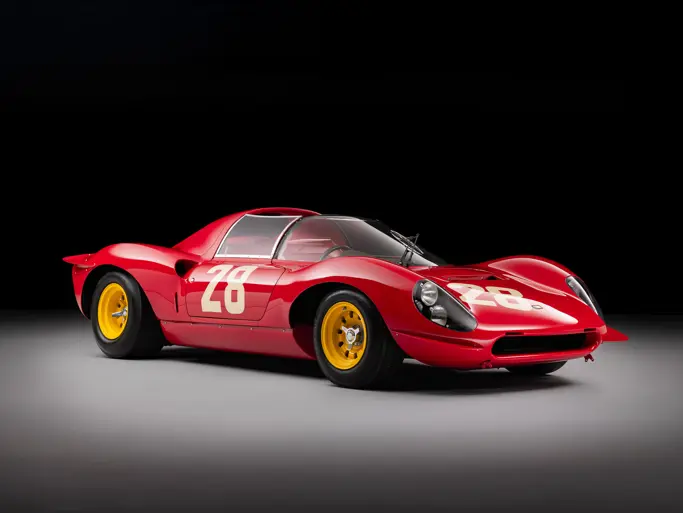
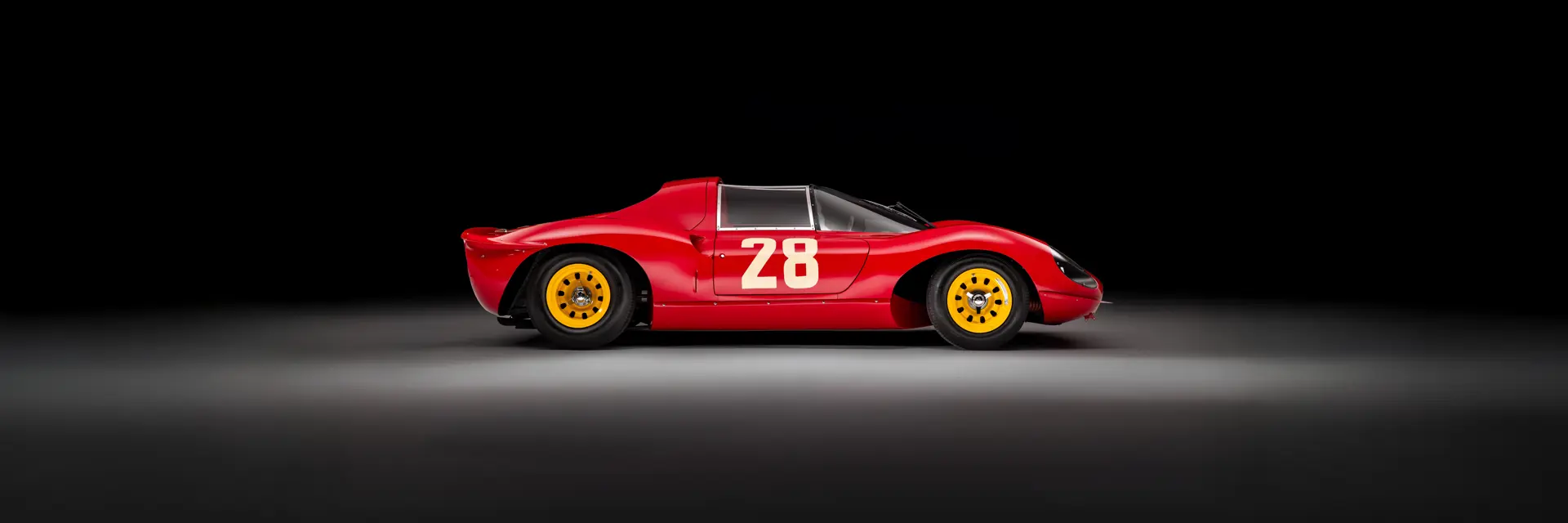
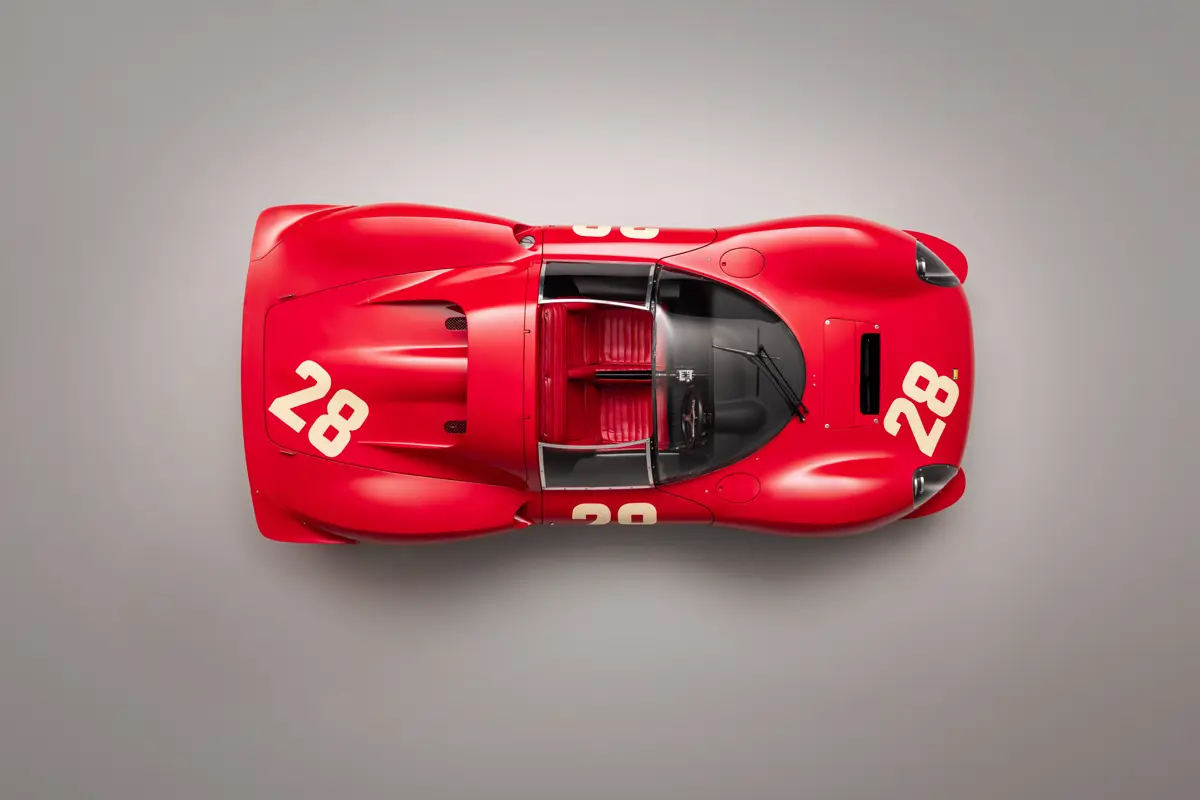
Introduced for the 1966 season, the Dino 206 S was not only a potent racer: it was without doubt one of the prettiest machines to ever turn a wheel in anger. To many, it seemed a scaled down version of the revered 330 P3, a curved sensation clothed in ravishing coachwork sculpted by Piero Drogo’s Carrozzeria Sports Cars of Modena. Beneath Drogo’s aerodynamic body shell, itself formed of a combination of stressed alloy panels and glass fibre over a welded tubular semi-monocoque chassis, the ferocious Dino V-6 offered eye-opening performance. By the end of the 1966 race season, the 206 S had proved its mettle, earning a 2nd place finish at the Targo Florio, 2nd and 3rd at the Nürburgring, and a 6th place finish at Spa. Although the 206 S was originally slated for a homologation of 50 examples, labour problems prematurely interrupted production after only 18 cars had been assembled. The model remains a rare and important milestone in the arc of the Dino race car’s development, as well as a touchstone for the Ferrari road cars that followed.
While only part of the intended production run ever emerged from the gates at Maranello, the 206 S instantly left its mark on the world of motorsport. Lorenzo Bandini and Ludovico Scarfiotti scored a 5th-place finish during the models inaugural outing at the 1966 12 Hours of Sebring, and later that year, a trio of cars took on one of the most gruelling tests in international competition: the Targa Florio. The lithe sports car proved well suited to the tight, twisting mountain roads of Little Madonie, with Jean Guichet and Giancarlo Baghetti not only winning their class, but finishing 2nd overall behind the Scuderia Filipinetti Porsche 906. The successes kept coming, with class wins at the Spa 1000 Kilometres, the Nürburgring 1000 Kilometres, Nassau Trophy, and outright victory at the Coppa Cittá di Enna.
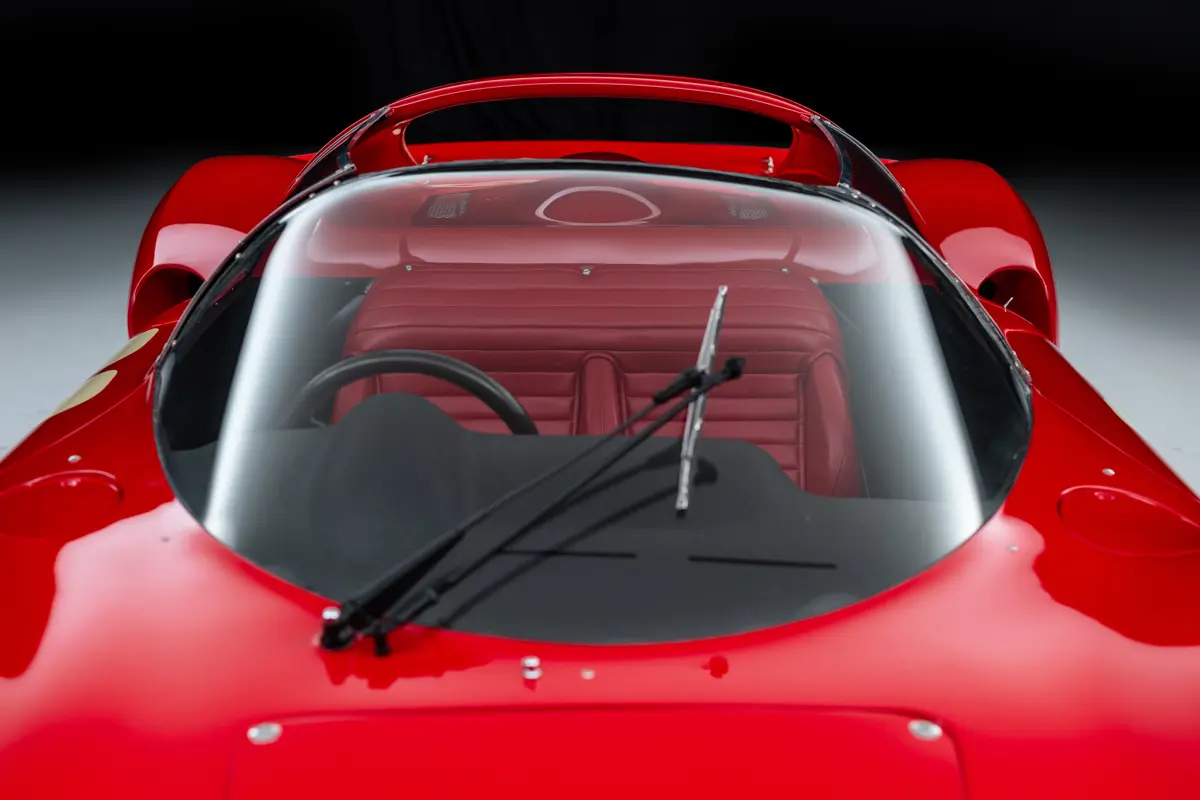
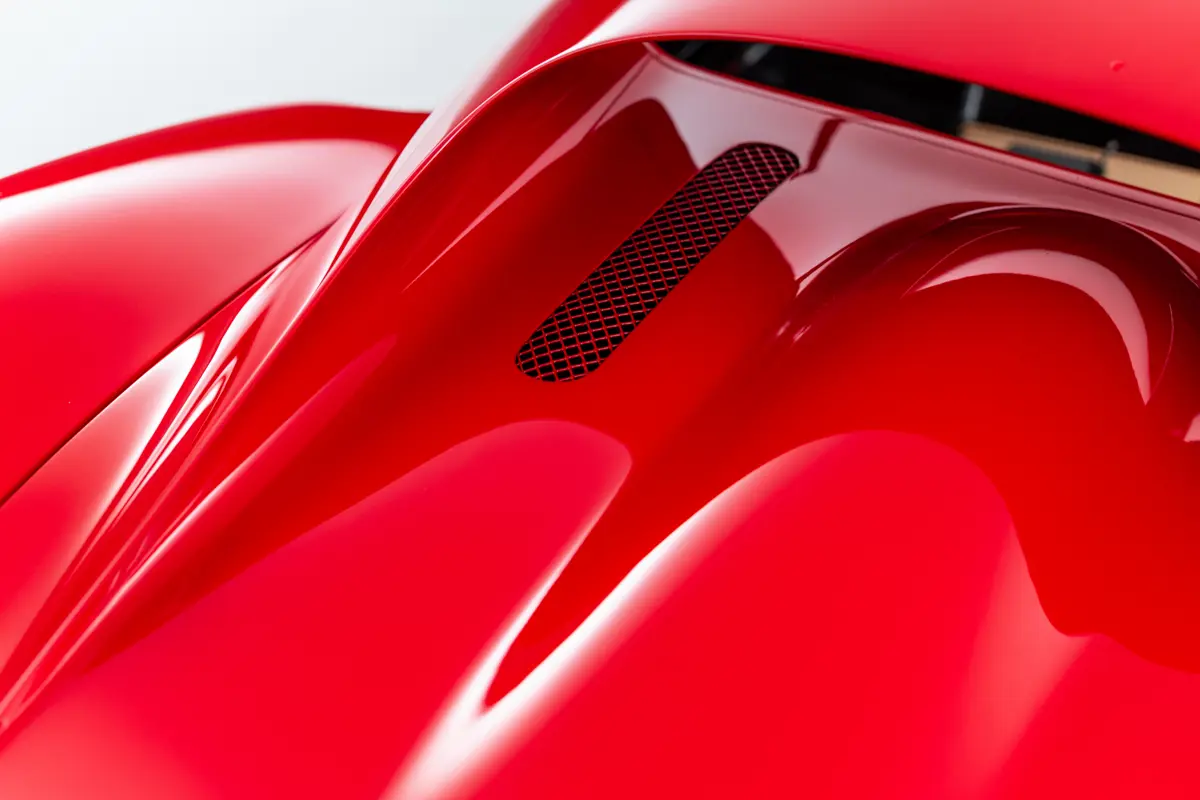
Chassis 032 was the ultimate development of the 206 S, being the final example of the 18 cars constructed. Rarer still, just 13 cars were bodied as Drogo Spyders, while only two examples—including chassis 032—are believed to have been fitted with the most powerful Tipo 233 engine and Lucas mechanical fuel injection. Unlike earlier Tipo 227-engined cars, and the evolved Tipo 231L, which produced 220 horsepower and up to 255 horsepower, respectively, these two special cars laid claim to a total output in excess of 270 horsepower.
Outside of its almost unique specification, chassis 032 had a fascinating history that can be traced back to its earliest days. After leaving Maranello, the 206 S was shipped south to its first owner, property developer and engineer Corrado Ferlaino. A Napoli native, Ferlaino bled blue and in 1967 the businessman took a controlling stake in his boyhood football club. Under his stewardship, Napoli enjoyed one of the most successful periods in the club’s history, with the signing of Diego Maradona ultimately leading to two Serie A titles, the 1986-87 Coppa Italia, the UEFA Cup two years later, and the 1990 Supercoppa Italiana. He was also no stranger to quick Ferraris, having raced a GTO/64 under the Scuderia Sant’Ambroeus banner in the 1964 Targa Florio. A talented driver, he finished 5th overall with Luigi Taramazzo, the pair taking top honours in the GT category.
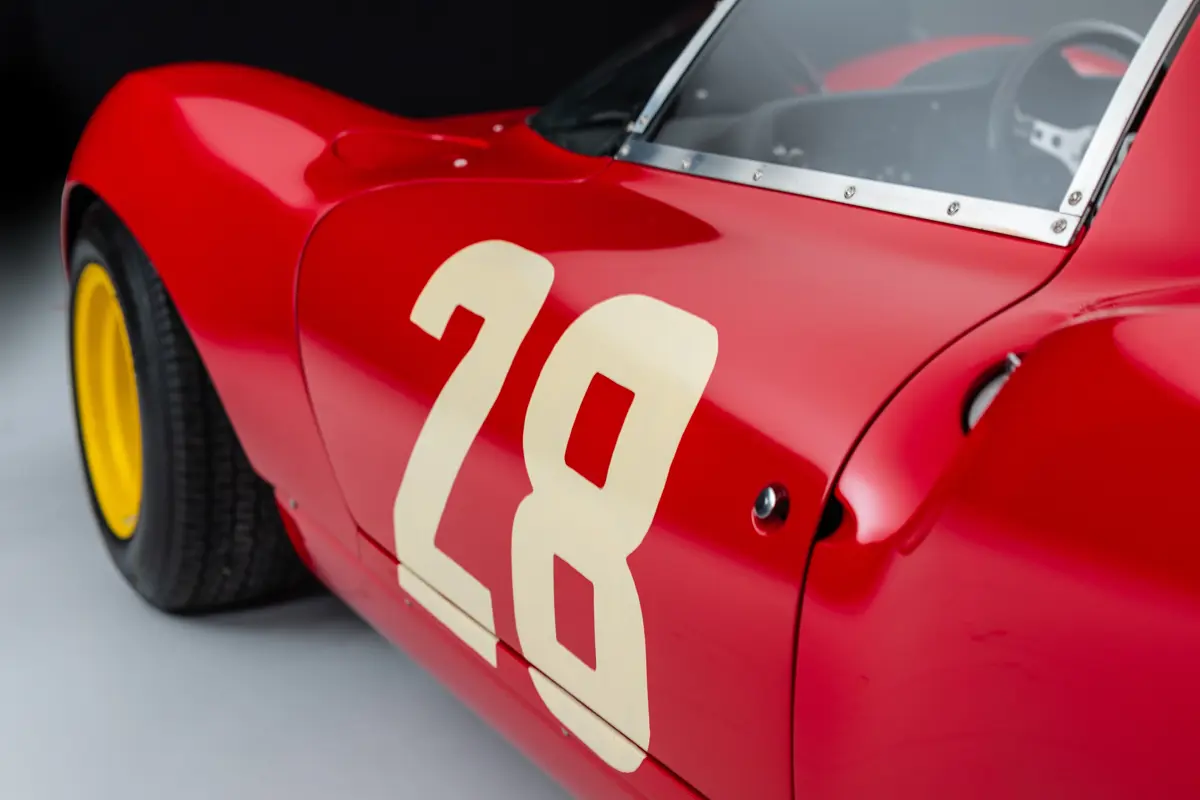
Throughout the 1966 and 1967 seasons, chassis 032 was campaigned at hillclimbs and sprints the length and breadth of Italy—including the ninth round of the 1967 FIA World Sportscar Championship, the 1000 Kilometres of Mugello—until in November 1968 it was returned to the factory for servicing. After that, the car was sold and passed through the hands of a number of Italian owners and, eventually, some significant collections. Despite its original condition, the 206 S was never far from the racetrack and in 2001 the Ferrari was involved in a collision during a Ferrari Historic Challenge race that prompted its restoration two years later. In 2014 the car returned to Maranello once more, this time for a full restoration at the hands of Ferrari’s own artisans, and was subsequently awarded Red Book certification.
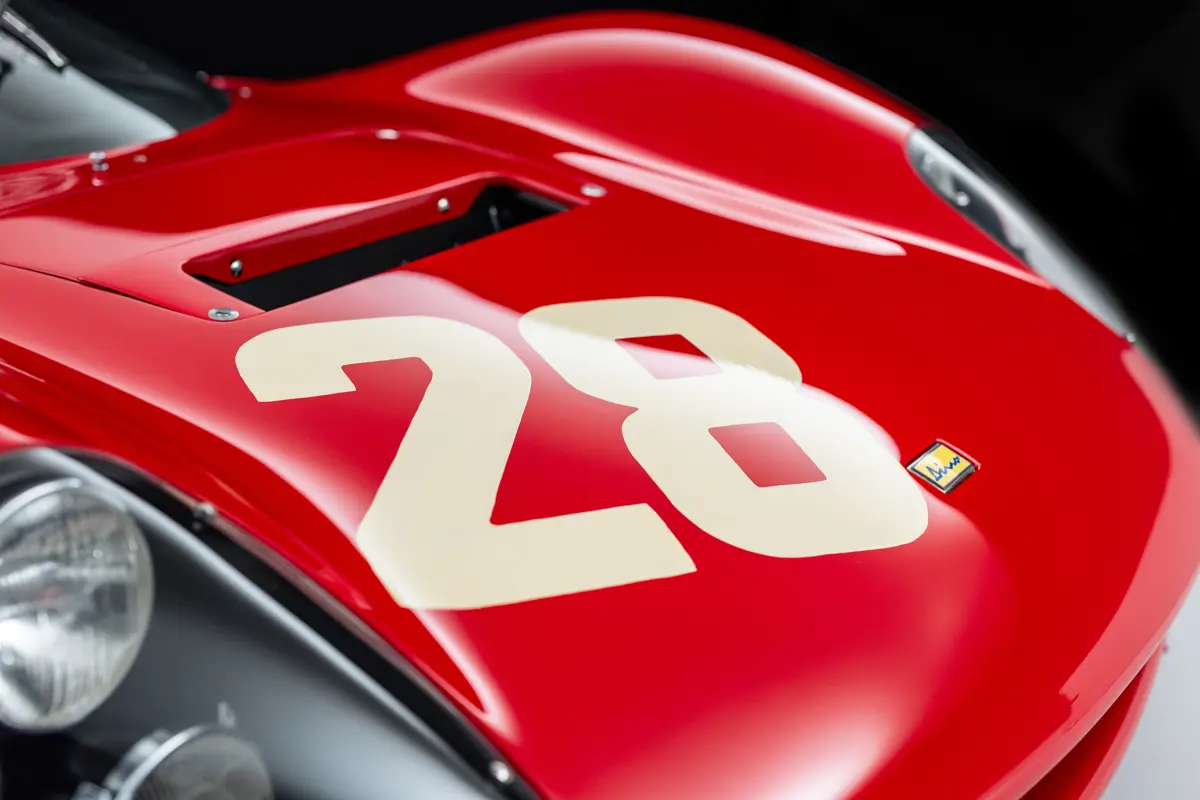
Today, this incredible Ferrari stands tall among the tiny cohort created in 1966. As the final car to leave Maranello, chassis 032 is inarguably the most developed, boasting the most powerful variant of the Dino V-6. One of just two examples fitted with such an engine, it is perhaps the most desirable of all Dino 206 Ss. But its significance runs much deeper than that. As the final car of its type to be built, it is the final racing car bearing the Dino name—drawing the curtain on a lineage of Formula 1, Formula 2, and sports racing cars that can trace their origins to Ferrari’s son. And while his name may have lived on in the road-going 206 GT and its stunning Scaglietti-bodied successors, its use in competition—for many Ferrari’s raison d’être—drew to a close with this very car.