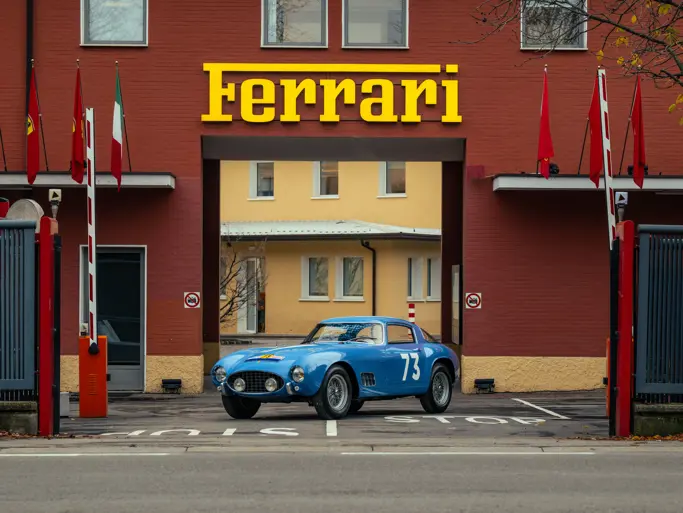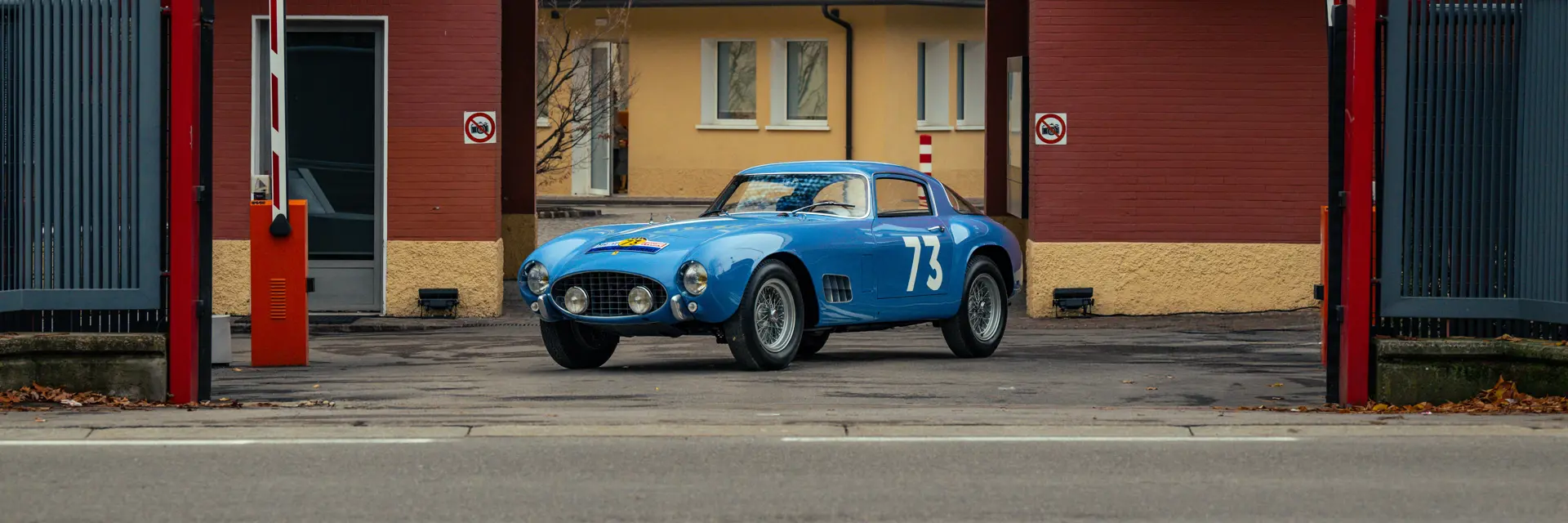
Ferrari author James Page tells the story of Alfonso de Portago’s 1956 Ferrari 250 GT Berlinetta ‘Tour de France’—the very car that won the model its name
For any marque that was looking to showcase the performance and reliability of its cars, the Tour de France Automobile was one of the greatest tests of the 1950s and ’60s. Not only did it cover thousands of kilometres on the road, it included circuit races and hillclimbs, and with few opportunities to rest, it was just as punishing for the crews as it was for their cars.
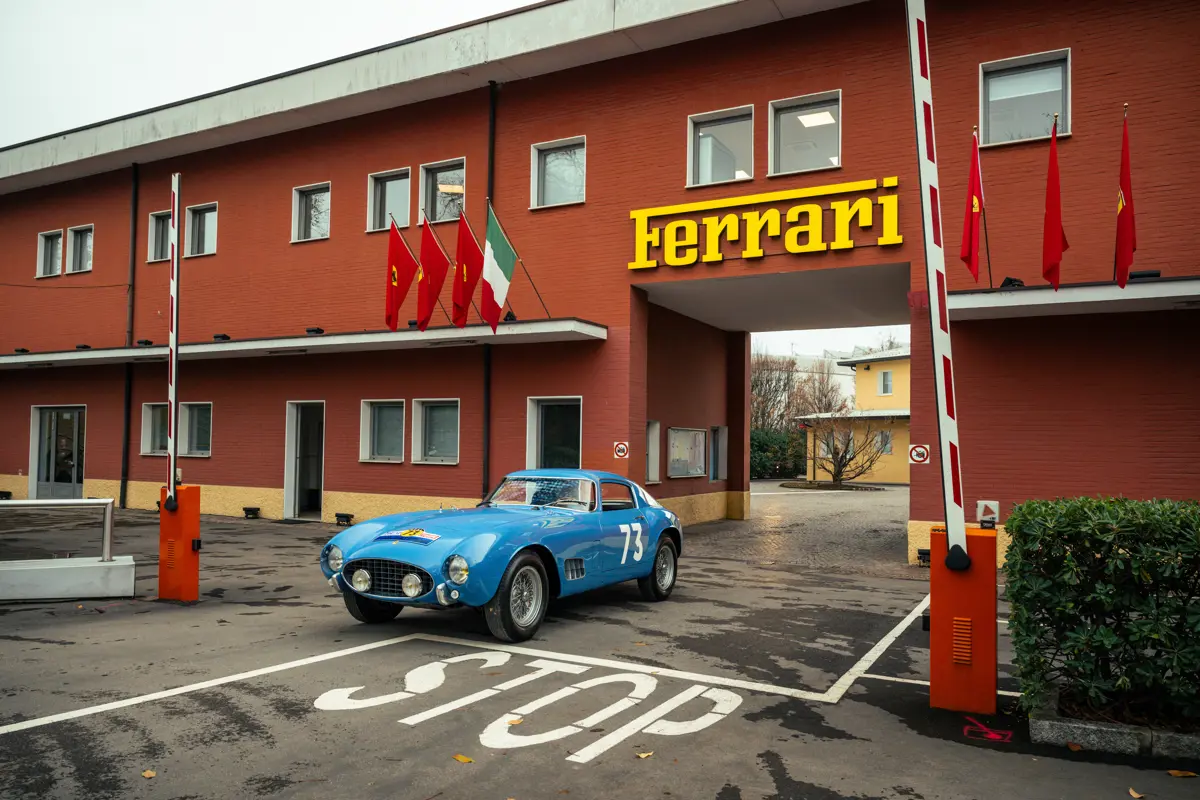
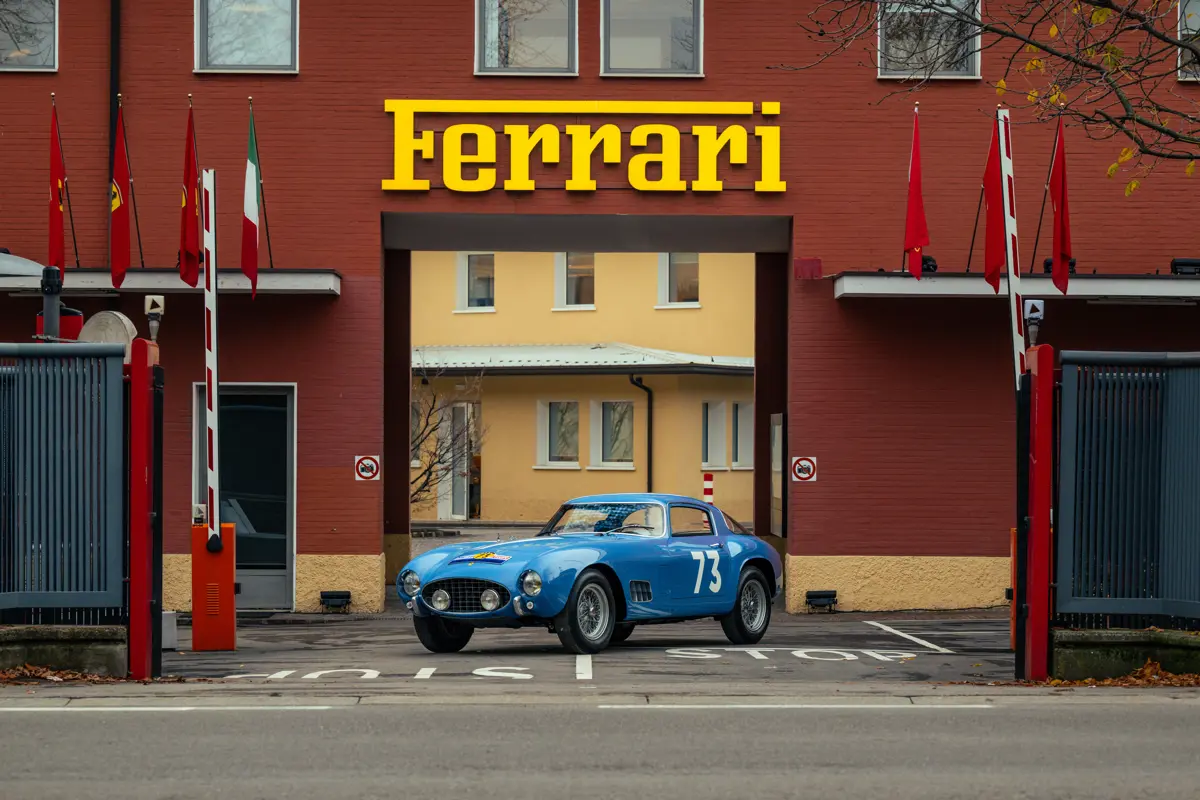
In its heyday, it attracted leading manufacturers and drivers, but for almost an entire decade it was a Ferrari stronghold, the Maranello-based firm enjoying an unbroken run of success that began with the car you see here. In 1956, this 250 GT Berlinetta—chassis number 0557GT—scored the first of nine consecutive Tour de France wins for Ferrari, and it did so in the hands of one of that era’s most charismatic drivers.
During the second half of the 1950s, the Scuderia was engaged on multiple fronts in its battle for motorsport supremacy. In Formula One, Juan Manuel Fangio and Mike Hawthorn each won the Drivers’ World Championship in its cars. In international sports-car racing, there was great success with the spectacularly powerful 315 S and 335 S, as well as the 3-litre 250 Testa Rossa. But perhaps nowhere was Ferrari more dominant than in the increasingly influential world of GT racing, where its 250 GT Berlinetta swept all before it.
This fabled bloodline perfectly defined the dual-purpose road-racer—the sort of car in which privateer owners could drive to an event, race, and then drive home again—and that made it ideal for events such as the Tour de France. The model could trace its roots to the 250 Europa GT, which had been unveiled at the 1954 Paris Salon and combined a 3-litre version of Ferrari’s Gioachino Colombo-designed V-12 engine with a new Tipo 508 chassis that had a wheelbase of 2,600 mm.
That basic recipe formed the foundation for the subsequent 250 GT Berlinetta, which would be built in small numbers and developed at a rapid pace thanks to its use in competition. Along the way, there were minor modifications to the chassis, and the engine was soon updated from the Tipo 112 to the Tipo 128, which retained little from its predecessor other than its 2,953 cc capacity.
During 1956, Italian coachbuilder Scaglietti built nine cars to a Pinin Farina-based design, while five more received Zagato bodywork. There would be myriad detail changes for subsequent cars, with the first revisions coming in early 1957, when the rear wing line was altered, vertical tail lights added, and a smaller rear screen fitted. In the rear quarter panels behind the door glass, a set of 14 louvres helped with cabin ventilation. Later that year, the number of louvres was reduced to three, while front-end modifications included higher headlamps beneath Perspex covers; the main air intake was redesigned, too.
During 1958, the rear quarter panel was altered again to feature only a single vent and, with the exception of some 250 GTs that were destined for overseas markets, the covered headlamps were dropped in early 1959 due to Italian safety legislation. Then, towards the end of that year, Ferrari introduced a new generation of 250 GT Berlinetta, the revised chassis of which led to it becoming known as the Short Wheelbase. And that car, in turn, was developed into the 250 GTO.
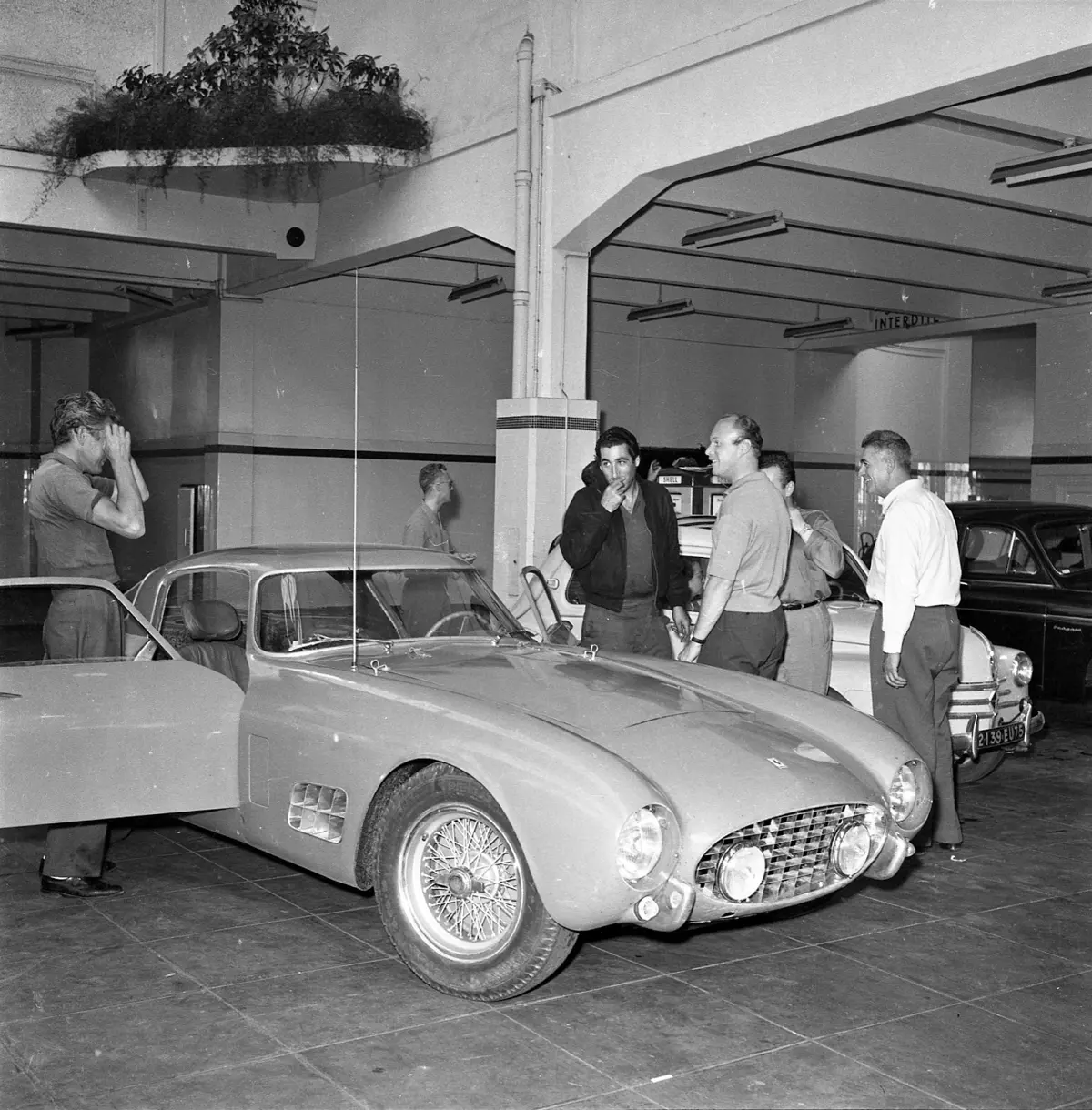
From 1956 onwards, this bloodline enjoyed huge competition success, from class wins on the Mille Miglia and at Le Mans, to overall victory in the Giro di Sicilia and Reims 12 Hours, but nowhere was it more dominant than on the Tour de France. Its unprecedented winning streak on that event started with 0557GT, the ninth of only 14 ‘first series’ 250 GT Berlinettas. It was fitted with Scaglietti bodywork plus a Tipo 128B engine, and sold new to a multi-talented Spanish nobleman: Alfonso de Portago.
Born in 1928 and named after his godfather—Alfonso XIII, the king of Spain—de Portago packed an extraordinary amount into what would be a tragically short life. After his father had passed away, young Alfonso was sent to America to complete his education and briefly attended The Lawrenceville School in New Jersey. He then lived with his mother at the Plaza Hotel in New York, where he first met Ed Nelson, who was 12 years older than de Portago and worked there as a lift attendant. The two soon became firm friends.
De Portago was a natural all-round athlete and inveterate thrill-seeker. He once flew an aeroplane under a bridge for a bet, and later became a leading amateur jockey. He was also part of the Spanish bobsleigh team at the 1956 Olympics and maintained what could be called an energetic social life with a succession of beautiful women.
His nature was such that it seemed inevitable that, sooner or later, he would become involved in motor racing—despite the fact that he was by no means a car enthusiast. In late 1953, he met the Italian-American Ferrari importer Luigi Chinetti, who invited de Portago to join him on the forthcoming Carrera Panamericana in a 375 MM. The youngster served only as a passenger to the hugely experienced Chinetti and was mostly terrified by the experience, but he was inspired enough to start racing himself.
De Portago therefore bought himself a Ferrari and dived in at the deep end by entering the 1954 Buenos Aires 1000 km. At that stage, he’d never driven a car with a manual gearbox and knew nothing about racing, but he learned fast. By 1956, he was part of the Ferrari factory team and was remembered by Juan Manuel Fangio, no less, as being a good and courageous racer.
He also looked the part. Tall, louche, and effortlessly cool, de Portago was once described by Enzo Ferrari as being “a kind of magnificent hippy”, but added that “what sticks in my mind is that gentlemanly image which always managed to emerge from the crude appearance he cultivated.”
Ferrari teammate Phil Hill, later to win the World Championship with the Scuderia, had a similar recollection:
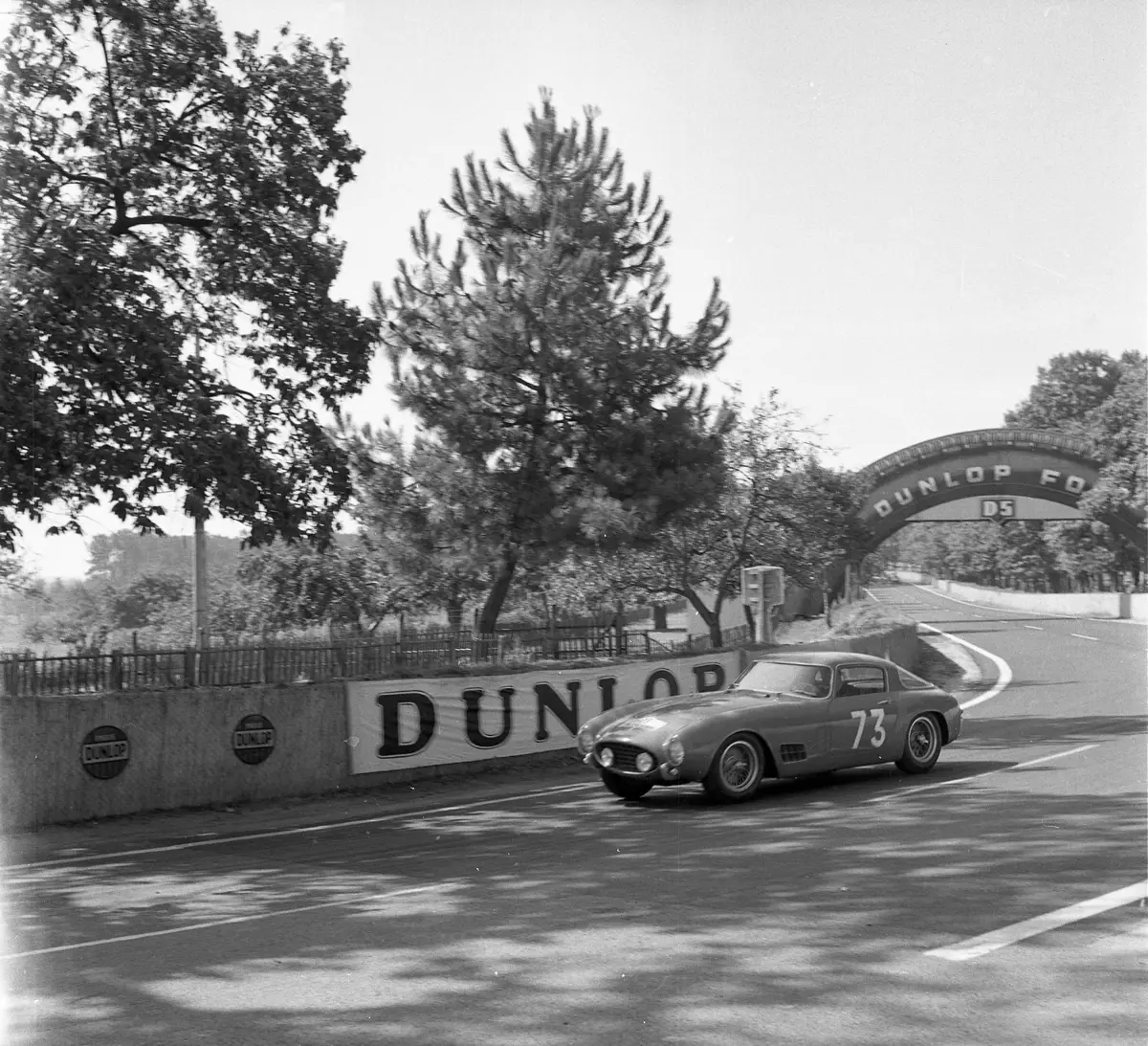
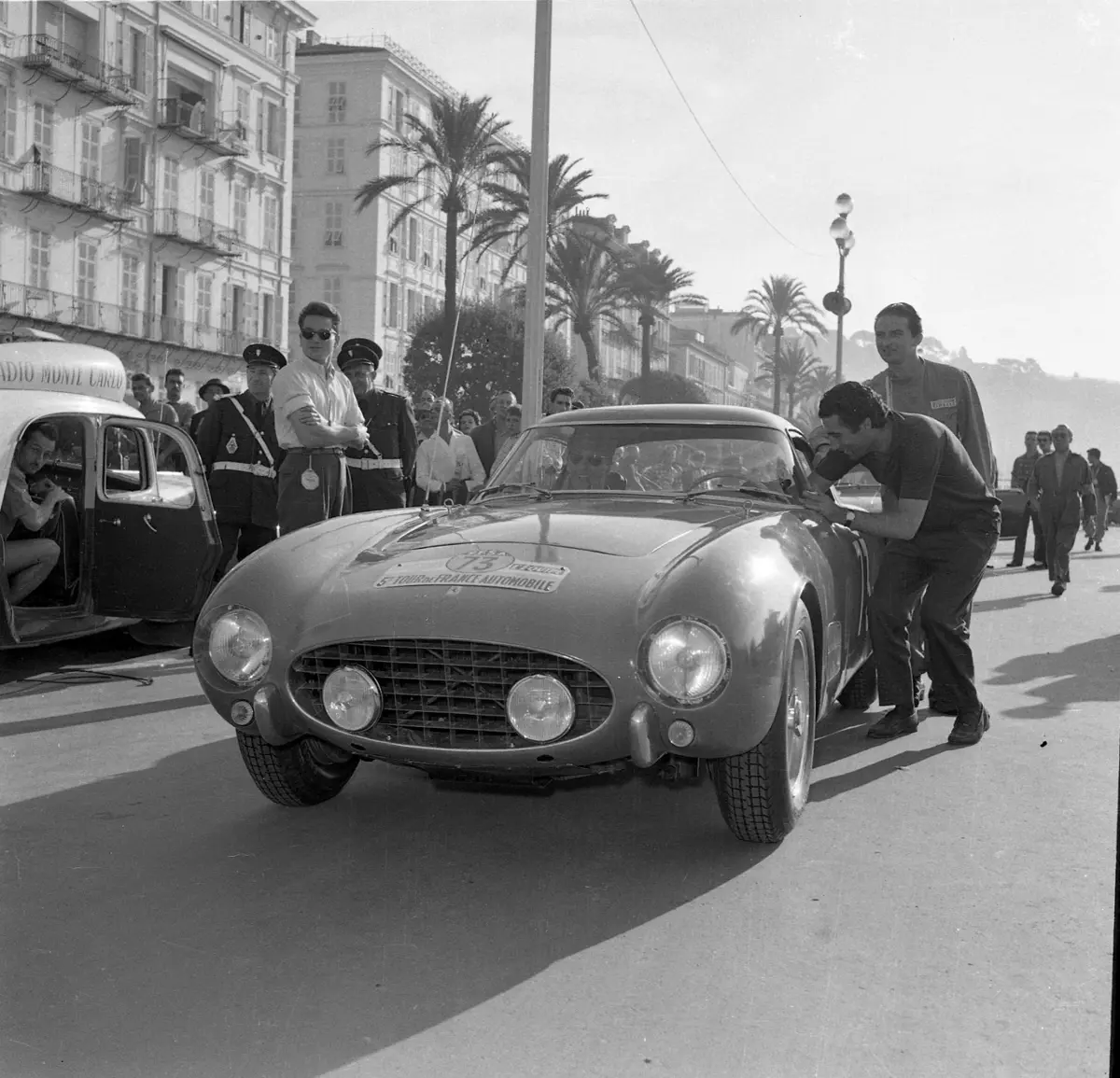
The highlight of de Portago’s 1956 season came with his victory on the Tour de France, which was held from 17-23 September. He was joined in 0557GT by his old friend Ed Nelson, and as they prepared for the start in Nice, ahead of them lay a 6,000-kilometre route that took them around France—and sometimes into its bordering countries—with only two night-stops in which to snatch a bit of rest. Such was the challenge that only 37 crews would make it to the prize-giving in Paris, out of the 103 who left Nice.
During the early stages, it seemed as though the 250 GTs were going to have to play second fiddle to the Mercedes-Benz 300 SLs, which were driven by the likes of Stirling Moss and Willy Mairesse, plus René Cotton and 1954 Tour de France winner Jacques Pollet. Having left Nice, competitors made their way to the first hillclimb—the 21.6 kilometre ascent of Mont Ventoux, where Pollet drew first blood for Mercedes thanks to a neat, fast run.
As the field headed towards a short stop at Nimes, 300 SLs filled the first four places, Pollet leading Mairesse, Moss, and Cotton. Best of the Ferraris was de Portago, who was lying 5th. As Denis Jenkinson wrote in Motor Sport magazine: “Right from the word go, the Mercedes-Benz cars were showing a marked superiority and, but for de Portago, had swamped the Ferrari opposition.”
The Spaniard continued to make inroads as the event progressed, but Moss won a five-lap race around the Comminges circuit and Pollet was fastest up the Peyresoude hillclimb. Early on the third day, however, the momentum began to swing towards Ferrari. During the previous night, the cars had followed a westerly route up through France before arriving at Le Mans for a 12-lap race, during which Moss struggled with an ignition fault, Cotton suffered a burst tyre at high speed, and a piston failed in Mairesse’s car. De Portago again made up ground, but it was still Pollet who led at that night’s rest stop.
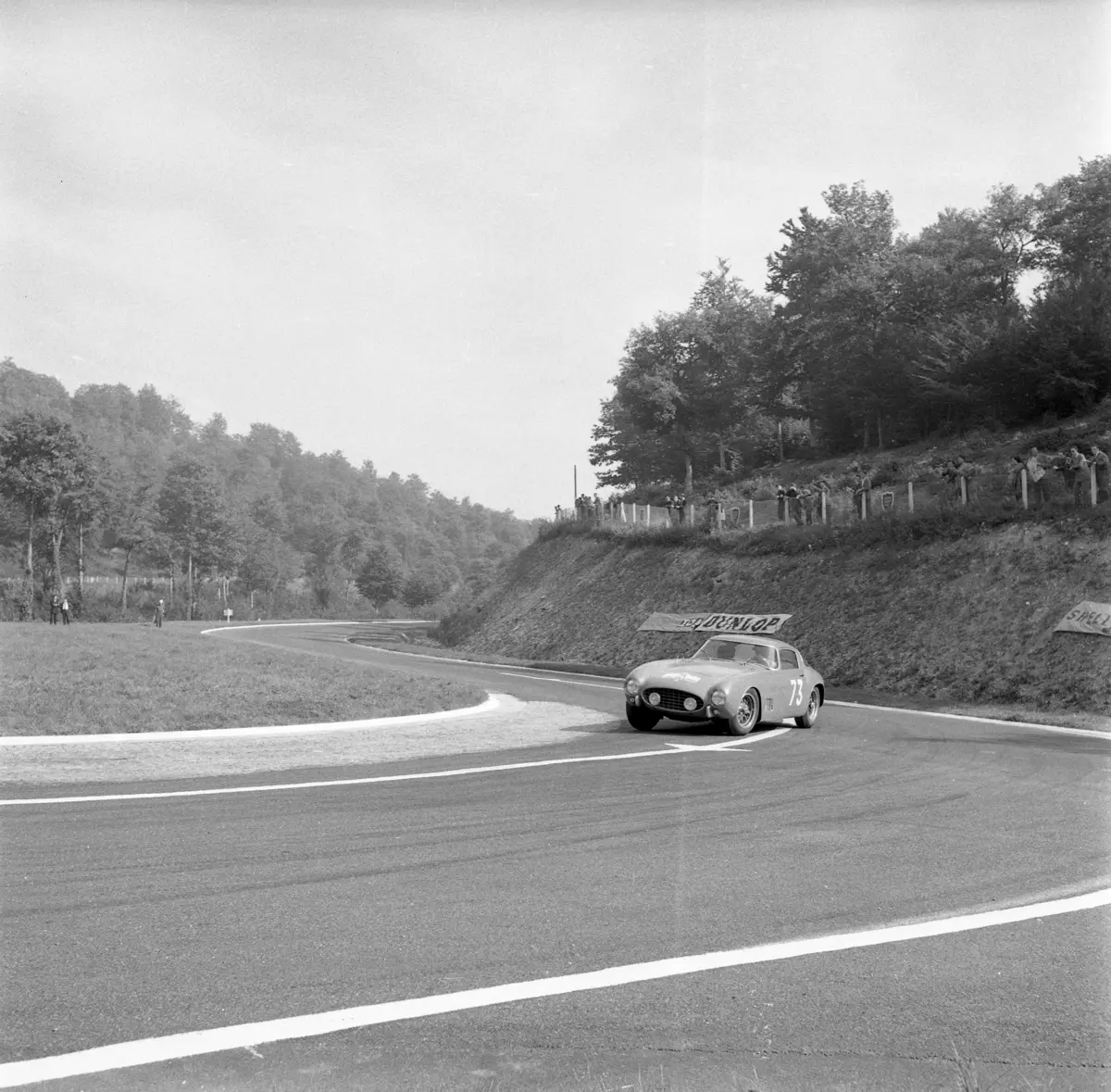
On Thursday morning, de Portago continued his fightback at the daunting Rouen-les-Essarts road circuit. With Moss still battling a misfire, the Spaniard beat all of the Mercedes-Benzes in the eight-lap race and moved into the overall lead as they left Normandy and headed for Reims for a night-time race. There he won again, but then Pollet moved ahead courtesy of victory in a half-kilometre test at Aix-les-Bains, where de Portago managed to knock off the Ferrari’s ignition while rapidly changing up into third gear.
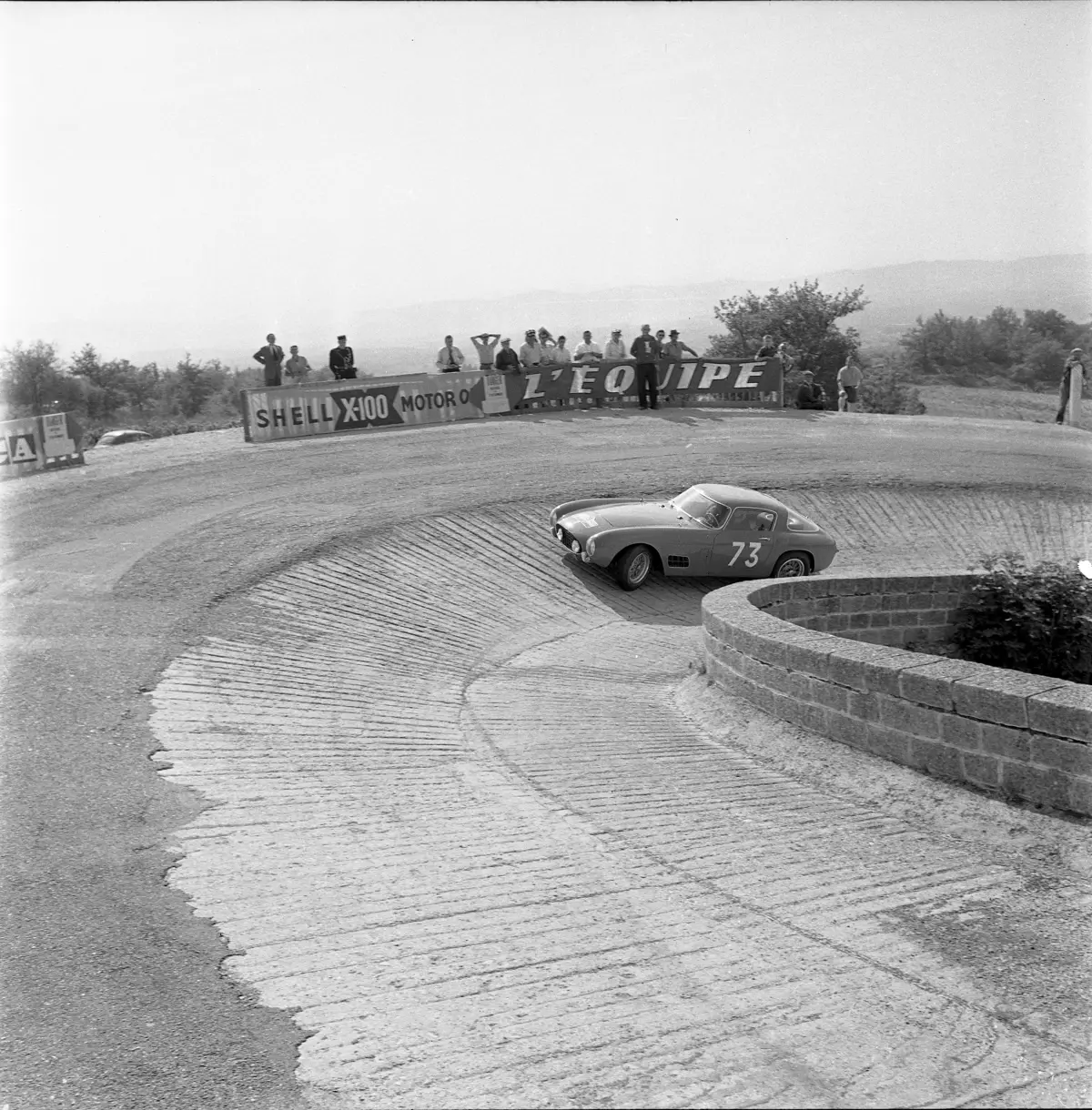
The Mercedes held onto its advantage as they travelled down to Grenoble and tackled the Alpine passes between there and Briancon, only to retire on Saturday following engine problems that had been incurred during a race at St Etienne earlier that day. That left de Portago leading from Moss as they arrived at Montlhéry for the final race. Moss, who’d finally solved his engine problems, dominated from the front as de Portago approached the 12-lapper more cautiously, safely reaching the finish and claiming overall victory.
“As a vindication of the Gran Turismo type of car, it was a complete success,” concluded Jenkinson in Motor Sport, adding that “it was a wonderful trial of the combination of stamina of man and machine, together with skill and suitability of the cars.”
Twelve months later, Olivier Gendebien won again for Ferrari, then did likewise in 1958 and 1959. It’s therefore not surprising that the long-wheelbase 250 GT Berlinettas from that era collectively became known as the ‘Tour de France’ models. That link has endured into the 21st century, too, with buyers having long been able to specify ‘Blu Tour de France’ for their new Ferrari, and the name even being revived for a track-focused special edition of the F12.
Sadly, the man who’d scored the first of all those consecutive wins was no longer around to see others continue what he’d started. After taking 0557GT to further victories through late 1956 and into early ’57, de Portago tackled that year’s Mille Miglia at the wheel of a factory-entered Ferrari 335 S. With his old friend Nelson alongside him once again, de Portago managed one last characteristic flourish when, much to the delight of onlookers, he kissed his girlfriend—actress Linda Christian—before accelerating away from a late pit stop.
Shortly afterwards, a tyre blew at high speed near the town of Guidizzolo, only 30 miles from the finish line in Brescia. Both de Portago and Nelson were killed in the accident, as were nine spectators, including five children. The tragedy had far-reaching consequences and spelt the end for the Mille Miglia, and legal proceedings against Enzo Ferrari rumbled on until 1961.
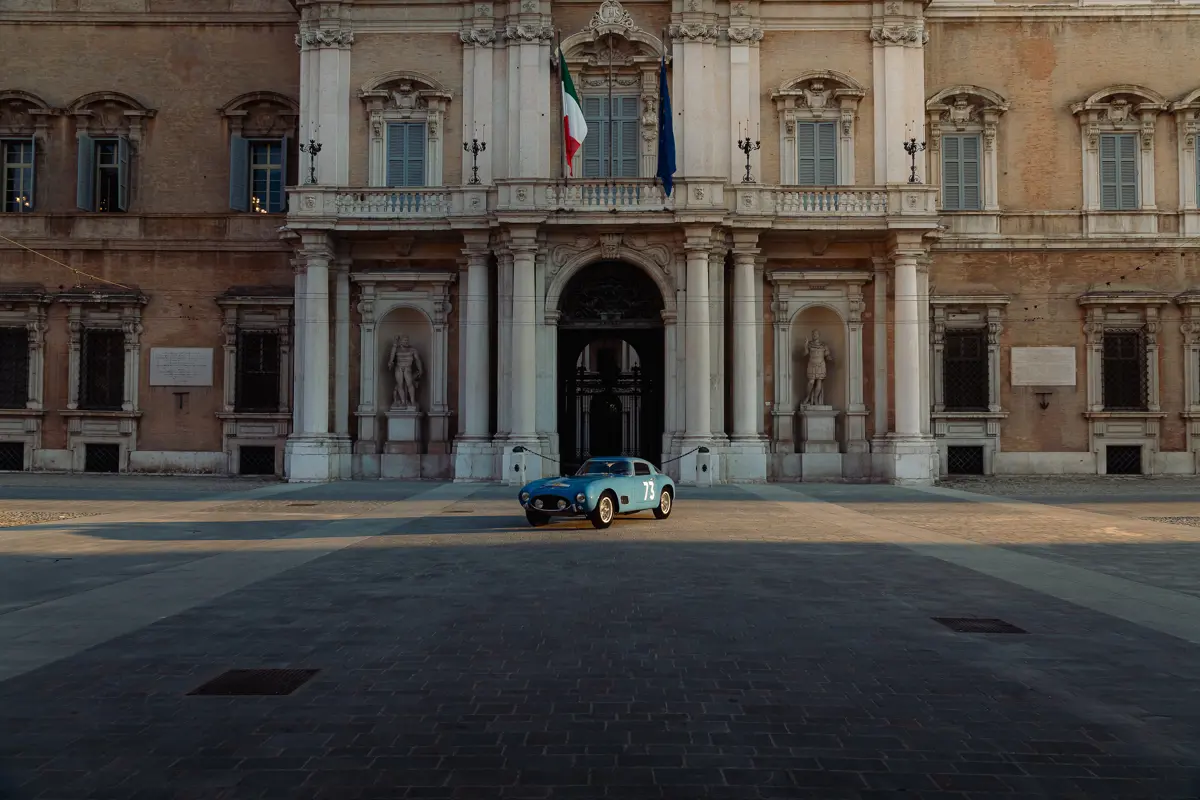
As for 0557GT, it returned to Maranello and was sold by de Portago’s family to Keith Schellenberg. The UK-based enthusiast kept the Ferrari until 1983, when it passed to Peter Palumbo, who sold it nine years later to Lorenzo Zambrano of Monterrey, Mexico. After being fully restored, it became a regular on the concours circuit and remained with Zambrano until he passed away in 2014, after which it was sold via RM Sotheby’s to its next custodian.
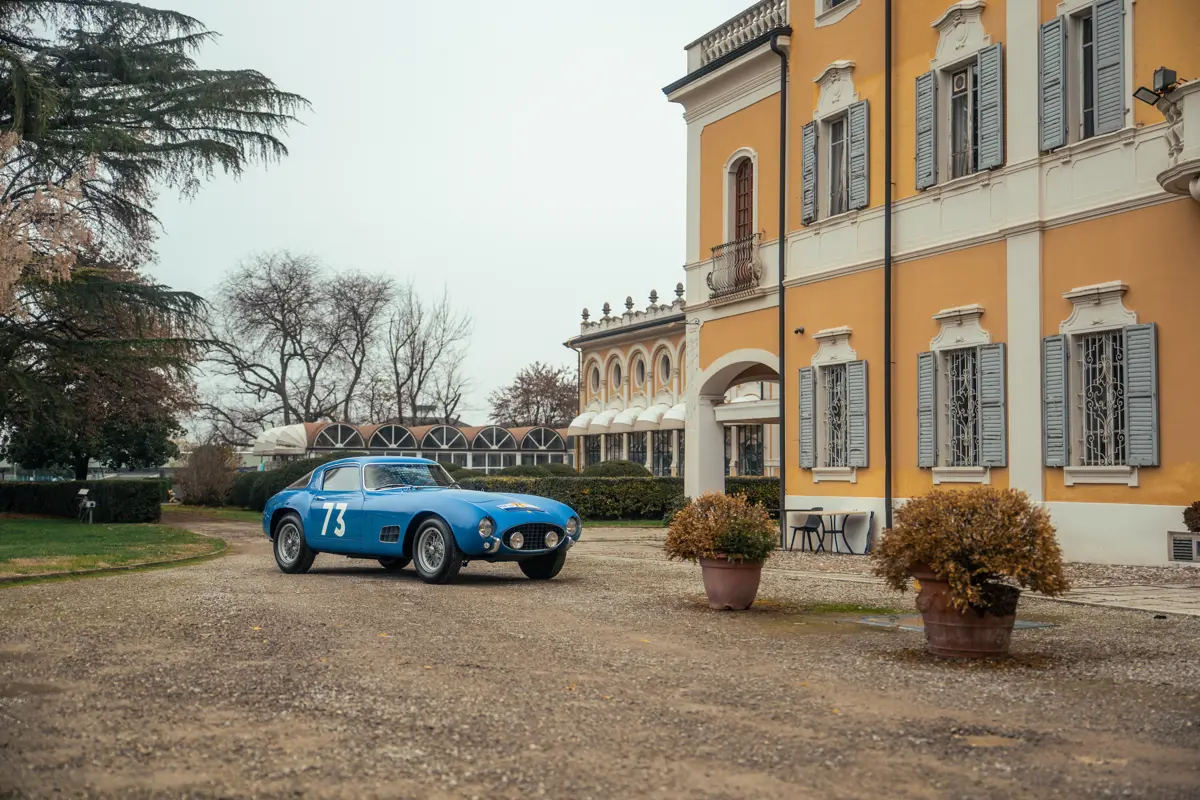
Having de Portago as its first owner would have made this remarkable car fascinating enough, but the fact that the colourful Spaniard drove it to victory on that gruelling Gallic adventure in 1956 adds several layers to its legend. As the original 250 GT Berlinetta ‘Tour de France’, it stands alone—a unique survivor from a defining era in Ferrari history.